

 vanessa
A GHRH analog plus ghrelin mimetic, such as the CJC/ipamorelin research blend is a paired research approach that stimulates the pituitary gland through two separate receptors at once. The first component, a growth hormone-releasing hormone analog, mimics the body’s own signal to release growth hormone. The second, a ghrelin mimetic, activates the ghrelin receptor (also called the growth hormone secretagogue receptor) and amplifies that release while limiting the hormone that normally dampens it. Used together, they produce a stronger and more pulsatile response than either does alone, which is why researchers study them as a pair.
The idea matters because growth hormone signaling touches metabolism, tissue repair, and body composition, and the pairing offers a cleaner way to study that system. A well-known example combines a GHRH analog with a selective ghrelin mimetic. It remains a laboratory subject, and its limits are real: evidence in humans is incomplete, and the compounds are not approved for general use.
This article defines each component, explains how they work together, outlines the main types, and describes where the research stands. Understanding a biological system well, like learning patiently from knowledge that has been carefully held and shared, rewards close attention and honest limits.
What a GHRH Analog and a Ghrelin Mimetic Mean in Plain Language
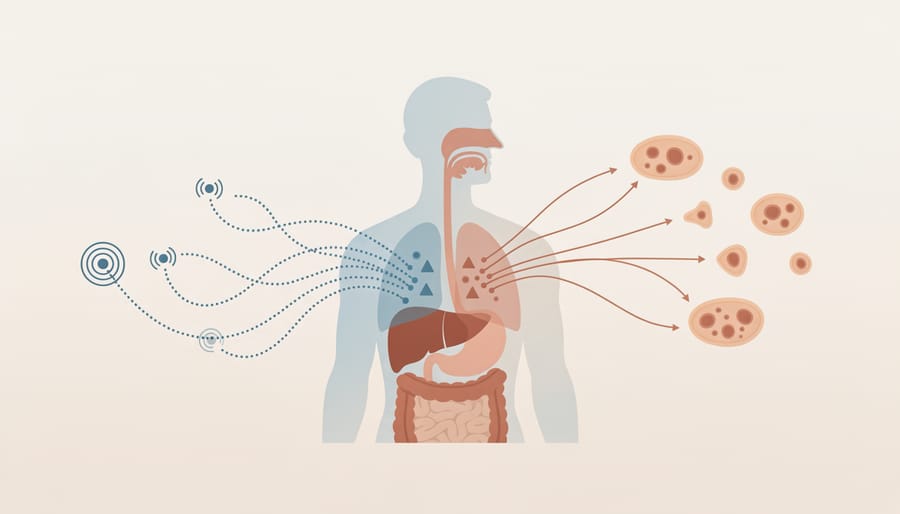
The GHRH Analog: A Signal From the Hypothalamus
Growth hormone is a signaling protein made by the pituitary gland, and researchers study it for its role in growth, tissue repair, and metabolism. Its release is not random. It begins with GHRH from the hypothalamus a message sent from the brain to the pituitary. Just as the cultural context shapes how a story is heard, the receiving cell’s receptor shapes how this signal is read.
An analog is a modified copy of that natural message. Scientists adjust the molecule so it still fits the receptor but lasts longer or resists breakdown.
- Growth hormone
- A pituitary protein involved in growth and metabolism.
- GHRH
- The natural hypothalamic signal that prompts growth hormone release.
- GHRH analog
- A modified version of GHRH designed for greater stability or longer action.
- Receptor
- A protein on a cell’s surface that receives a specific signal.
The Ghrelin Mimetic: A Second, Separate Signal
Ghrelin is a hormone made mostly in the stomach, and it’s best known as the “hunger signal” that rises before meals. But hunger is only part of its story. Ghrelin also travels to the pituitary gland, where it attaches to its own receptor, called the growth hormone secretagogue receptor (GHSR). That attachment prompts the pituitary to release growth hormone, and it does so through a pathway separate from the one GHRH uses.
A mimetic is simply a mimic. A ghrelin mimetic is a compound designed to imitate ghrelin’s action at that receptor, so it carries the same message. You’ll also see these compounds called growth hormone secretagogues or GHSR agonists, which describe the same idea from different angles.
Think of it as a second messenger knocking on the same door, but using a different key. That difference in receptor is what makes pairing the two signals interesting to researchers.
How the Two Signals Work Together in the Body

Why Two Pathways Can Matter More Than One
The core idea is simple. A GHRH analog and a ghrelin mimetic don’t knock on the same door. One binds the GHRH receptor, the other binds the growth hormone secretagogue receptor, and both sit on the same pituitary cells. Researchers wanted to know what happens when both receptors are engaged at once.
In several studies, the answer was a response larger than you’d expect from simply adding the two effects together. Scientists call this synergy. A plausible explanation is that each pathway removes a different limit on the other. Ghrelin-type signaling is thought to dampen somatostatin, the natural brake, while the GHRH signal pushes release forward. With the brake eased and the accelerator pressed, the pituitary can respond more fully.
There is also a patterning argument. Because the pairing works through the body’s own receptors, some researchers hope it produces release that looks more like natural pulses than a single strong stimulus would.
Still, caution matters here. Results differ between studies, and they depend on the specific compounds, timing, and the people or models being studied. Synergy appears in some findings and is modest or absent in others. Treat the rationale as a promising hypothesis with mixed evidence, not a settled fact.
Pulses, Not Constant Flow
Growth hormone is not released in a steady stream. In healthy people it arrives in bursts, with the pituitary releasing a pulse, then quieting, then releasing again. Much of this activity clusters during deep sleep, and the gaps between pulses matter as much as the pulses themselves.
This is why timing sits at the center of this research. A single signal held at a constant level can blunt the response over time, because receptors and downstream pathways may adapt to continuous stimulation. Researchers often describe the natural pattern as a conversation rather than a monologue: the signals speak, then pause, so the listening cells can respond again.
Pairing a GHRH analog with a ghrelin mimetic is partly an attempt to work with that rhythm instead of overriding it. Because the two pathways converge on the same pituitary cells, a modest signal from each may trigger a pulse that resembles the body’s own, rather than a flat, sustained rise.
Duration of action therefore becomes a design question. A compound that clears quickly may produce a sharper, more pulse-like effect, while a longer-acting one may blur the rhythm. Studies measure this by sampling blood repeatedly over hours, and results differ across designs and participants, which is one reason careful interpretation matters.
Common Pairings and What Distinguishes Them
Researchers working in this area tend to talk about components in families rather than as a single fixed recipe. On the GHRH side, the best-known analogs are modified versions of the natural hormone fragment. Some are short-acting, mimicking the brief pulse the body normally produces. Others are altered so they resist breakdown and linger longer in circulation. That difference in duration matters, because a short signal and a sustained one can produce very different patterns of growth hormone release.
On the ghrelin mimetic side, the compounds are grouped by how they engage the growth hormone secretagogue receptor. Some are peptides that closely resemble ghrelin’s active region. Others are small molecules designed to act on the same receptor. They vary in how selective they are. A more selective compound mainly drives growth hormone release, while a broader one may also nudge hunger signaling or other hormones, such as cortisol and prolactin, which is a point researchers watch closely.
When people describe a “pairing,” they are usually comparing a few practical features:
– Duration of action: whether the signal is brief and pulse-like or extended.
– Receptor targeting: how precisely each component reaches its intended receptor.
– Side-effect profile: how much it affects appetite or unrelated hormones.
– Research maturity: how much published work exists, and how consistent it is.
These differences explain why no two studies are quite alike. A combination built from a short-acting analog and a highly selective mimetic behaves differently from one using longer-acting parts. That is also why comparing results across studies requires care. It helps to read the original literature rather than rely on summaries, and to remember that this overview is educational, not guidance on choosing, obtaining, or using any compound.
Where Researchers Apply This Combination
Researchers return to this pairing because it lets them probe the growth hormone axis from two directions at once. The interest is mostly mechanistic: how do separate receptor pathways combine to shape the pituitary’s output?
Here are the main research contexts where the combination comes up:
- Growth hormone axis studies, which examine how the hypothalamus, pituitary, and downstream hormones communicate.
- Aging research, particularly the gradual decline in growth hormone secretion seen in older adults.
- Metabolic and body composition studies, which look at how growth hormone signaling relates to fat and lean tissue.
- Diagnostic stimulation testing, where a ghrelin mimetic or GHRH-type agent helps clinicians assess pituitary function.
Much of this work happens in cell cultures, animal models, and small controlled human studies. Those are very different from the sweeping promises that sometimes appear in consumer marketing. A change measured in a lab, such as a rise in growth hormone pulses after stimulation, does not automatically mean a person will see a lasting benefit in strength, weight, or vitality. Study sizes tend to be small, durations short, and populations narrow, so the findings often don’t translate neatly to everyday life.
Learning to weigh these claims carefully is its own skill, and it helps to understand how researchers interpret evidence before drawing conclusions from any single result.
Regulatory status matters here too. Many compounds in this category are investigational, meaning they have not been approved for general therapeutic use in most countries. A few related agents have approved, narrow clinical uses, usually in diagnostics or specific deficiency conditions, but that is not the same as endorsement for broader or off-label purposes. Anyone curious about a specific compound should read the primary literature and speak with a qualified healthcare professional rather than rely on summaries or sales pages.
Limits, Cautions, and Honest Uncertainty

Studying two signals at once makes the picture harder to read, not easier. Many of the studies in this area are small, short, or run in narrow groups, so their results may not carry over to everyone. Reported effects also differ from study to study, and the quality of the research is uneven. Long-term safety is still an open question, especially for repeated or extended use, and individual variability matters too: age, health history, and existing conditions can all change how a person responds. Treating this kind of evidence with honest uncertainty means saying plainly what we do not yet know.
This article is informational only and describes research concepts, not medical advice. If you want to go deeper, read the primary literature directly and talk with a healthcare professional who knows your circumstances.
Common Questions About Combining a GHRH Analog With a Ghrelin Mimetic
Readers tend to arrive with the same handful of questions, so here are plain answers to the most common ones.
Why use two compounds instead of one?
Each compound works through a different receptor on the same pituitary cells. Researchers study the pairing because activating two pathways may produce a stronger or more naturally patterned response than either signal alone, though results differ from study to study.
Is a ghrelin mimetic the same as ghrelin?
No. A mimetic is a compound designed to imitate ghrelin’s action at its receptor, but it is a distinct molecule and may behave differently in the body, including how long it acts.
Does this raise growth hormone directly or stimulate its release?
It stimulates release. These compounds signal the pituitary to release the growth hormone it already makes, rather than supplying growth hormone itself.
Are these compounds approved for general use?
Many are investigational and not approved for general use, and regulatory status varies by compound and by country. Anyone curious about a specific one should check current regulations and speak with a qualified healthcare professional.
What does synergy mean here?
It describes a combined effect that is greater than simply adding the two separate effects together. In this research, it refers to the idea that two complementary signals may amplify one another at the pituitary.
Questions like these are a good reminder that the science is still unfolding. If something here raises a new question for you, the primary literature and a trusted clinician are the best places to take it next.
Researchers pair a GHRH analog with a ghrelin mimetic because the two signals reach the pituitary through separate receptor pathways. Studied together, they may produce a stronger and more naturally patterned release of growth hormone than either does alone. That is the heart of the idea, and it comes with real limits: study quality varies, long-term questions remain open, and many of these compounds are still investigational. Nothing here replaces the guidance of a qualified healthcare professional or the careful reading of primary research.
What this topic shows, perhaps, is how much patience complex systems ask of us. Balance in a living body rarely comes from one signal acting alone, and understanding it takes time, humility, and a willingness to sit with what is not yet known. We hope you carry that same spirit of careful learning into the cultural stories and lived experiences shared across this site, and we invite you to keep exploring them with us.