
 vanessa
Historic Old Québec sits on 11,000 years of continuous indigenous presence, long before European ships arrived in 1608. The Wendat, Innu, and Algonquin peoples called these lands home, trading and traveling the river highways, gathering at the narrowing of the St. Lawrence that gives the city its name: Kébec, “where the river narrows.”
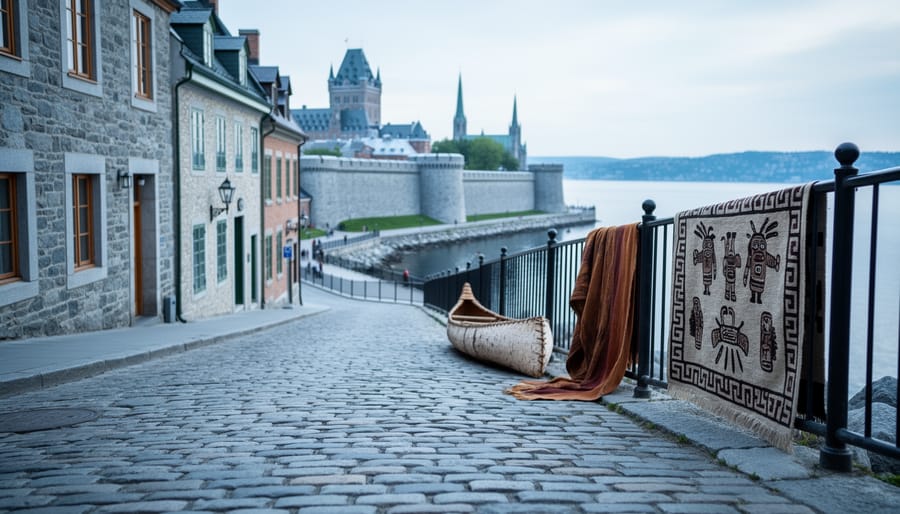
Today, visitors encounter a walled colonial city, North America’s only fortified settlement north of Mexico, where cobblestone streets wind past 17th-century stone buildings. UNESCO recognized the district in 1985 for its European heritage. Yet beneath the French facades and British fortifications lies a deeper story, one that predates Jacques Cartier’s arrival by millennia and continues to shape the region today.
The full experience of historic Québec City requires looking beyond the château and citadel. Indigenous communities maintain active ties to this territory. The Huron-Wendat Nation’s reserve at Wendake sits minutes from Old Québec‘s gates. Contemporary First Nations artists exhibit in the same district where their ancestors traded furs and negotiated treaties. Street names and monuments occasionally hint at this presence, though the visible architecture skews overwhelmingly colonial.
Understanding this layered history means recognizing both what stands and what came before. The stone ramparts tell one chapter. The river itself, the traditional territories, and the ongoing indigenous cultural vitality tell another. Both shape what Québec City means and what respectful visitors should seek to understand.
The First Peoples: Millennia Before the Walls
Long before French explorers first glimpsed the dramatic cliffside that would become the Historic District of Old Québec this strategic confluence of waterways had served as a vital crossroads for indigenous peoples for more than 10,000 years. The Huron-Wendat Nation, known in their language as Wendat meaning “People of the Island,” established significant settlements and maintained extensive trading networks throughout the region they called Stadacona. The St. Lawrence River, which the Huron-Wendat knew as Magtogoek (“river that walks”), provided not merely transportation but spiritual significance, seasonal sustenance, and the foundation for a sophisticated society that Europeans would later encounter.
The narrowing of the St. Lawrence at this point (Québec derives from the Algonquin word “Kebec,” meaning “where the river narrows”) created ideal conditions for fishing, river crossings, and controlling trade routes between the interior and the Atlantic coast. The Huron-Wendat maintained permanent settlements here, cultivating the Three Sisters (corn, beans, and squash) on the fertile floodplains while harvesting salmon, sturgeon, and eel from the river’s abundant waters. Winter encampments sheltered extended families in longhouses, some stretching over 100 feet, where oral histories passed between generations around central fires.
The Innu people, nomadic hunters who traveled vast territories across what is now eastern Québec and Labrador, used the Québec promontory as a seasonal gathering place, following caribou migrations and trading furs, tools, and cultural knowledge with agricultural nations. The Algonquin, Abenaki, and Mi’kmaq also moved through these waterways, creating a complex web of alliances, trade relationships, and shared seasonal resources that sustained diverse cultures across generations.
Archaeological evidence reveals continuous indigenous occupation through sophisticated pottery, tool-making traditions, and settlement patterns that adapted to climate shifts over thousands of years. When Jacques Cartier arrived in 1535, he documented a thriving Iroquoian village at Stadacona with Chief Donnacona leading a population estimated between 500 and 1,000 people. These weren’t primitive encampments but organized societies with governance structures, diplomatic protocols, and cultural practices refined across centuries. The stone walls and European architecture that define historic Québec City today rest upon indigenous foundations that shaped this landscape since time immemorial.
Indigenous Traces Within the Old City
Indigenous-Led Tours and Cultural Encounters
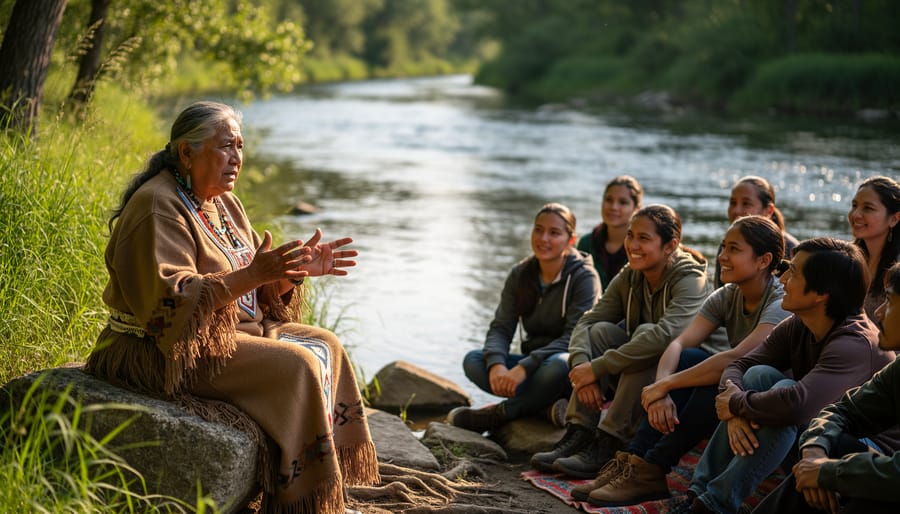
Several indigenous-led experiences in and around Old Québec provide authentic perspectives that commercial tours typically overlook. Ekionkiestha’ Tours, operated by Huron-Wendat guides, offers walking experiences through the historic district that reframe familiar landmarks through indigenous eyes, explaining how the promontory overlooking the St. Lawrence served as a gathering place and strategic observation point for millennia before Champlain arrived. These guides share traditional stories tied to specific locations, explain indigenous place names, and discuss what the landscape looked like before colonial development reshaped it.
The Huron-Wendat Nation at Wendake runs seasonal storytelling programs where knowledge keepers share oral histories, creation stories, and accounts of contact and adaptation. Some sessions take place at the traditional longhouse site, providing cultural context that indigenous museums complement with artifacts and deeper historical analysis.
Tours Voir Québec collaborates with indigenous guides for specialized programming that connects historic neighborhoods to their pre-contact significance. These experiences emphasize the St. Lawrence and St. Charles rivers as ancient travel routes and explain how indigenous communities maintained relationships with this territory even after displacement.
Booking directly through Huron-Wendat cultural organizations ensures your participation supports indigenous guides and cultural practitioners. Most experiences require advance booking, particularly during summer months, and some programs operate seasonally based on traditional cultural calendars.
Contemporary Indigenous Art and Craft
Walking through the boutiques and galleries of Old Québec reveals a growing presence of authentic indigenous artistry, though discernment remains essential. Galerie d’art Brousseau et Brousseau on rue Saint-Louis showcases contemporary Inuit sculpture and carvings alongside First Nations works, offering pieces that support northern artists directly. The shop represents established artists whose work carries provenance documentation, distinguishing genuine indigenous creation from mass-produced imitations.
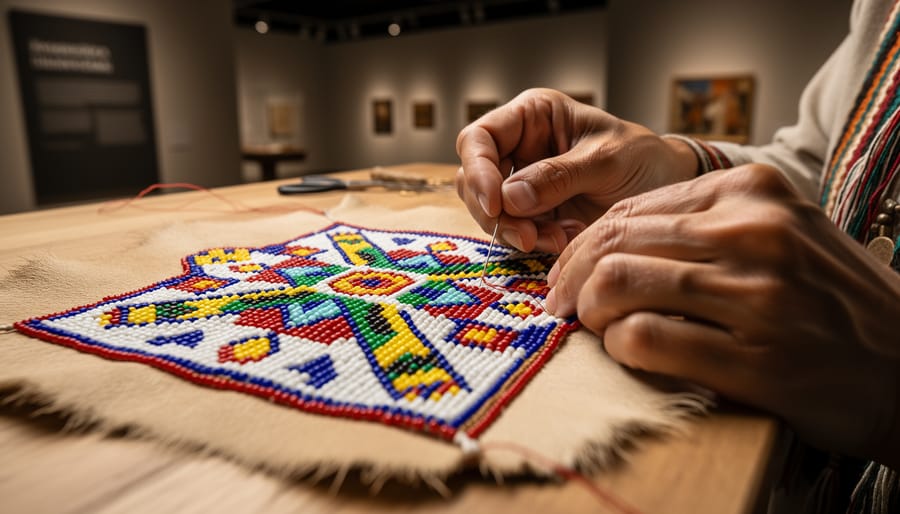
Several artisans within the historic quarter sell birchbark basketry, moosehide moccasins, and beadwork rooted in traditional techniques. When purchasing, look for artists who can discuss their cultural background and methods, authentic practitioners welcome questions about their nation, training, and materials. Price reflects the labor-intensive handwork involved; suspiciously cheap items typically signal factory production elsewhere.
The Marché du Vieux-Port de Québec occasionally features indigenous vendors during peak season, providing opportunities to meet makers directly. These face-to-face encounters offer cultural exchange beyond transaction, where artists share stories embedded in their work. Supporting indigenous cultural practitioners means choosing quality over quantity and understanding that authentic pieces carry both artistic value and the continuation of centuries-old knowledge systems.
Understanding the Layered History: A Respectful Approach
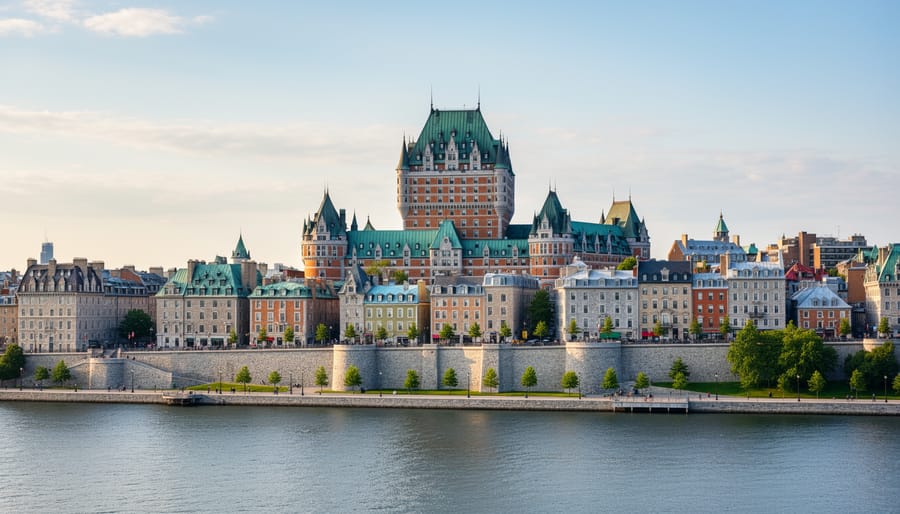
Walking through Historic Old Québec presents a complex narrative that deserves thoughtful engagement. The fortified walls, stone buildings, and French colonial streetscapes tell one chapter of this place’s story, but they sit atop a much older foundation. The indigenous peoples who shaped this landscape for thousands of years did not vanish when European settlements rose; they adapted, resisted, and persisted. Approaching your visit with this awareness transforms tourism into genuine cultural learning.
Start by questioning what you’re seeing. When you admire the architecture of Place Royale or the Château Frontenac, recognize that these structures replaced indigenous settlements and represent a colonial project that displaced First Nations from their ancestral lands. This doesn’t diminish the historical value of these sites, but it provides necessary context. The beauty of Old Québec exists alongside a history of cultural suppression, territorial dispossession, and policies designed to erase indigenous presence.
Look beyond the dominant narrative presented in many mainstream tours and plaques. The year 1608, frequently cited as Québec’s founding, marks European arrival, not the beginning of human habitation. The St. Lawrence confluence held strategic, spiritual, and economic importance to the Huron-Wendat, Innu, and other nations centuries before Champlain’s settlement. When historical markers reference “discovery” or “founding,” mentally reframe these terms to reflect the indigenous perspective: invasion, colonization, unwanted contact.
Support institutions and businesses that center indigenous voices rather than those that appropriate their culture. Choose tours led by First Nations guides, purchase art directly from indigenous makers, and visit venues like the Huron-Wendat Museum where communities control their own narratives. Your tourism dollars can either perpetuate extraction or contribute to cultural revitalization, choose consciously. Understanding Historic Old Québec means holding space for both the visible colonial heritage and the indigenous story that continues unfolding today.
Visiting Wendake: The Heart of Huron-Wendat Culture
Just 15 minutes north of Old Québec, the community of Wendake offers an essential counterpoint to the colonial narrative dominating the historic quarter. This is the reserve of the Huron-Wendat Nation, a living community where thousands of years of culture continue to thrive alongside contemporary life. Visiting Wendake transforms a trip to historic Québec City from a simple architectural tour into a genuine encounter with the First Nations whose presence shaped this region long before European settlement.
The Huron-Wendat Museum anchors any visit, presenting the nation’s history through artifacts, oral traditions, and contemporary perspectives that challenge colonial framings. The museum’s permanent collection includes pre-contact objects, tools that demonstrate sophisticated craftsmanship, and exhibitions addressing both historical trauma and cultural resilience. Unlike interpretive centers filtered through non-indigenous perspectives, this institution is Huron-Wendat-led, offering authority and nuance outsiders cannot replicate.
| Attraction | Experience Type | Best For | Seasonal Notes |
|---|---|---|---|
| Huron-Wendat Museum | Cultural/Educational | History learners, families | Year-round, indoor |
| Hotel-Musée Premières Nations | Immersive stay/dining | Cultural immersion seekers | Year-round |
| Traditional site Onhoüa Chetek8e | Outdoor interpretive | Active visitors | May-October |
| La Traite Restaurant | Indigenous cuisine | Food enthusiasts | Year-round |
The Hotel-Musée Premières Nations blends accommodation with cultural education, featuring a traditional longhouse reconstruction and exhibits integrated into the guest experience. Even if you are not staying overnight, the hotel welcomes day visitors to explore its interpretive elements and dine at La Traite, which serves contemporary indigenous cuisine rooted in traditional ingredients and preparation methods. The menu features game meats, wild plants, cedar-infused dishes, and indigenous takes on Québec City maple syrup prepared by chefs trained in both Huron-Wendat culinary traditions and modern techniques.
During warmer months, the traditional site Onhoüa Chetek8e (meaning “our traditional land” in Wendat) offers guided walks through reconstructed longhouses, demonstrations of traditional skills, and storytelling sessions led by community members. This outdoor interpretive space provides tangible connection to how the Huron-Wendat lived before displacement, with guides explaining the cultural significance behind architecture, tools, and seasonal practices. Book ahead for cultural performances featuring traditional dance, song, and drum circles that occur regularly throughout the summer.
Common Questions About Indigenous Heritage in Historic Québec
Visitors to Historic Old Québec often wonder how to engage meaningfully with the indigenous heritage underlying the city’s more visible colonial architecture. These are the questions cultural centers, tour guides and indigenous practitioners hear most frequently.
Whose traditional territory is Québec City on?
Québec City sits on the traditional and unceded territory of the Huron-Wendat Nation, though the region was also traveled and used by Innu, Algonquin and other First Nations. The Huron-Wendat community of Wendake, 15 minutes from Old Québec, maintains continuous connection to this land.
Where can I find authentic indigenous cultural experiences?
Seek out indigenous-led tours, visit the Huron-Wendat Museum in Wendake, attend performances at the Hotel-Musée Premières Nations, and shop at galleries featuring work by verified First Nations artists. Avoid generic “native-themed” tourist shops that sell mass-produced items with no connection to local communities.
How do I respectfully engage with indigenous heritage sites?
Listen more than you photograph, ask permission before taking pictures of people or cultural ceremonies, purchase directly from indigenous artists when possible, and approach sacred or ceremonial information with humility rather than entitlement. If you’re unsure about protocol, simply ask your indigenous guide or host.
Does cultural programming differ between summer and winter?
Yes. Summer brings outdoor powwows, traditional games demonstrations and land-based teachings, while winter focuses on indoor storytelling, craft workshops and the snow-season traditions that shaped indigenous life in this climate. Both seasons offer rich programming, though summer typically has more frequent events.
Those wanting to deepen their understanding should explore where to learn through museums and cultural centers that prioritize First Nations voices. Supporting indigenous tourism means booking directly with indigenous-owned businesses, purchasing authentic art and crafts, and choosing experiences that compensate indigenous guides and knowledge keepers fairly. The Huron-Wendat Tourism office in Wendake can direct you to verified indigenous operators, and many indigenous-led experiences specifically request advance booking to ensure cultural practitioners receive proper preparation time and fair compensation for sharing their knowledge.
Walking the cobblestone streets of Historic Old Québec reveals only part of the story. The stone walls and French colonial facades stand on land where indigenous peoples thrived for thousands of years before European contact, and where First Nations communities continue to live, create, and share their cultures today.
Your visit becomes richer when you acknowledge both layers. The visible colonial architecture tells one history; the deeper indigenous presence, from ancient seasonal camps to contemporary Huron-Wendat culture in nearby Wendake, tells another that’s equally vital and very much alive.
Seek out indigenous-led experiences. Support artists and cultural practitioners directly. Listen when First Nations guides share their perspectives. These choices transform a typical tourist visit into genuine cultural exchange.
Historic Québec City offers something rare: a chance to understand how indigenous heritage and colonial history intersect in a single place. The question isn’t whether to appreciate the stone buildings, they’re undeniably beautiful, but whether you’ll look beyond them to honor the fuller story.
The land remembers everything. When you approach your visit with respect for all the histories layered here, you honor both the past and the living cultures shaping Québec’s future.