
 vanessa
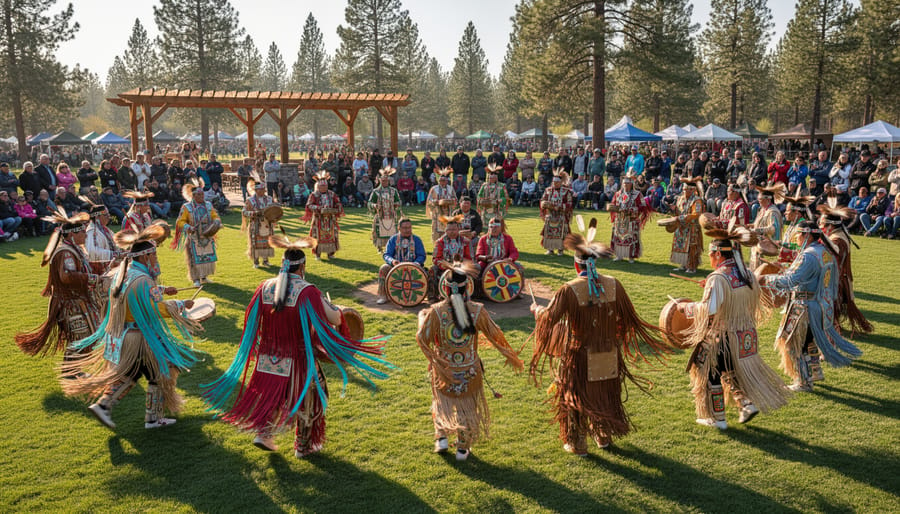
The thunderous rhythm of drums echoes across open fields as hundreds of dancers move in brilliant regalia, their movements telling stories passed down through countless generations. This is a pow wow—a living celebration of Native American culture that serves as both sacred gathering and public festival, connecting indigenous communities to their heritage while welcoming others to witness traditions that have survived centuries of adversity.
A pow wow represents far more than entertainment or spectacle. These gatherings function as vital cultural institutions where Native peoples from diverse tribal nations come together to honor their ancestors, strengthen community bonds, renew spiritual connections, and share teachings with younger generations. The Grand Entry procession, competitive dancing categories, honor songs, giveaway ceremonies, and vendor spaces each carry profound significance within indigenous worldviews.
Understanding what happens at a pow wow requires recognizing these events as active expressions of cultural resilience and sovereignty. Each element—from the Master of Ceremonies’ words to the specific dance styles representing different tribal traditions—reflects centuries of indigenous knowledge systems. The circle formed by dancers symbolizes the sacred hoop of life, while protocols around the arena and eagle staff demonstrate respect for spiritual elements present in these spaces.
Whether you attend as a curious visitor or seek deeper cultural knowledge, approaching pow wows with humility and respect opens pathways to genuine cross-cultural understanding and appreciation of indigenous peoples’ continued vitality.
Understanding the Pow Wow: More Than a Gathering
A pow wow is far more than a public event or festival—it is a living ceremony where Indigenous peoples come together to honor their ancestors, celebrate their resilience, and pass sacred knowledge from one generation to the next. These gatherings pulse with the heartbeat of drums, the stories woven into regalia, and the footsteps of dancers whose movements connect earth to sky. For many Native communities, pow wows represent a vital expression of cultural identity that has survived centuries of attempted erasure.
At its core, a pow wow serves as a spiritual gathering where Indigenous nations renew their connections to Creator, community, and cultural traditions. The circle formation that defines pow wow grounds symbolizes the sacred hoop of life, with no beginning and no end, representing the continuous cycle of seasons, generations, and spiritual renewal. Within this circle, participants don’t simply perform—they pray through dance, sing ancient songs that carry the voices of ancestors, and create a space where the seen and unseen worlds meet.
As many elders teach, the pow wow ground becomes a place where the spirits of those who have walked on dance alongside us, reminding us who we are and whose we are.
This spiritual dimension intertwines seamlessly with the social fabric of pow wows. These gatherings strengthen kinship bonds, forge new relationships across tribal nations, and create opportunities for young people to learn directly from knowledge keepers. Grandmothers teach granddaughters the precise beadwork patterns that tell clan stories. Uncles guide nephews in the protocols of entering the dance circle. Community members share meals, exchange news, and reinforce the collective values that sustain Indigenous cultures.
Perhaps most significantly, pow wows function as powerful acts of cultural resistance and affirmation. They demonstrate that Indigenous peoples are not relics of the past but vibrant, contemporary communities actively shaping their futures while honoring their pasts. Every jingle dress that rings with healing, every feather that catches the wind, every voice raised in song proclaims survival, continuity, and the unbreakable spirit of Native peoples. In understanding this depth, visitors and learners approach pow wows not as spectators of entertainment, but as witnesses to something profoundly sacred and enduring.
The Sacred Circle: Traditional Elements of a Pow Wow
The Grand Entry: Beginning With Honor
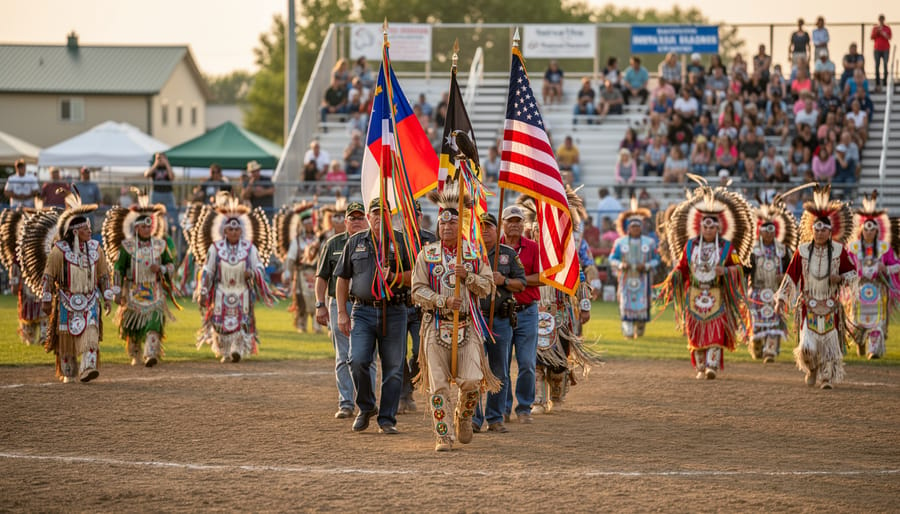
The Grand Entry marks the ceremonial beginning of every pow wow, a sacred moment when the entire gathering pauses in anticipation. As the emcee’s voice echoes across the grounds, attendees rise to their feet in respect, creating a collective silence that speaks to the profound significance of what follows.
Leading the procession are the flags and their carriers, entering the dance arena in a specific, purposeful order. The Eagle Staff comes first, representing the Creator and tribal sovereignty, followed by the American flag, state flags, and flags representing military branches and tribal nations. These emblems carry deep meaning, honoring both indigenous identity and the service of Native veterans who have defended their communities and country across generations.
Behind the flags walk veterans, often wearing regalia that incorporates elements representing their military service. This placement at the front of the Grand Entry demonstrates the community’s profound respect for those who have served, a tradition that connects contemporary military service with ancient warrior traditions. Many indigenous communities have the highest per capita military service rates in the United States, making this recognition particularly meaningful.
Following the veterans, dancers enter organized by category: men’s traditional dancers, women’s traditional dancers, grass dancers, jingle dress dancers, and fancy dancers, among others. Each group moves in rhythm to the host drum’s heartbeat, their regalia creating waves of color and movement.
This opening ceremony represents far more than spectacle. It embodies cultural continuity, community unity, and spiritual connection, setting the sacred foundation for all that follows during the pow wow gathering.
The Drum: The Heartbeat of the People
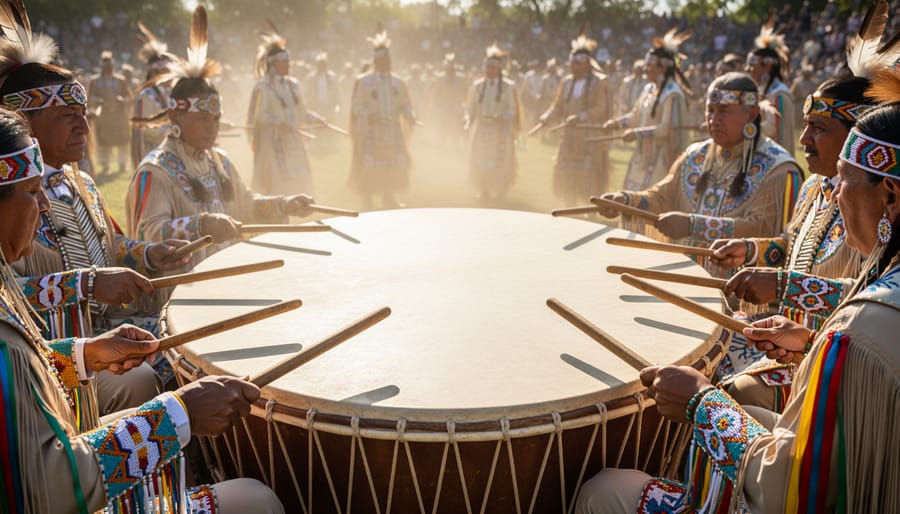
At the center of every pow wow sits the drum, often described as the heartbeat of Mother Earth and the pulse that connects all living beings. The drum group, typically composed of singers and drummers seated in a circle around a large communal drum, holds a sacred responsibility. Their music does more than provide accompaniment for dancers; it carries prayers skyward, honors ancestors, and maintains the spiritual energy that flows through the gathering.
The rhythm produced by the drum resonates with profound spiritual significance across Native nations. Many indigenous peoples teach that the steady beat mirrors the first sound we hear in our mother’s womb—the human heartbeat—creating an immediate, visceral connection to life itself. This understanding transforms drumming from mere musical performance into a sacred act that unifies participants with the natural world and the spirit realm.
Different drum styles reflect the diverse musical traditions among Native nations. Northern-style drumming typically features a higher pitch and faster tempo, while Southern styles often incorporate a deeper, more resonant sound with distinct vocal techniques. Host drums, those invited to lead ceremonies, carry special honor and responsibility, while contest drums may compete for recognition of their musical excellence.
The relationship between drum rhythm and indigenous worldview runs deep. The circular formation of drummers represents the sacred circle of life, continuity, and community interconnectedness. Each drumbeat reinforces core values: respect for tradition, recognition of spiritual presence, and acknowledgment of our place within the greater web of creation. Through the drum, generations maintain their cultural identity and pass forward the songs their ancestors entrusted to them.
Dance Styles and Their Stories
At the heart of every pow wow lies the sacred art of dance, where movement becomes prayer, storytelling, and cultural preservation all at once. Each dance style carries its own unique history, regalia, and meaning, passed down through generations as living expressions of indigenous identity and resilience.
- Men’s Traditional Dance
- One of the oldest pow wow dance styles, rooted in warrior societies and hunting traditions, characterized by deliberate movements that honor ancestors and tell stories of bravery.
- Women’s Jingle Dress Dance
- Originating from an Ojibwe healing vision in the early 1900s, this dance features dresses adorned with metal cones that create a distinctive sound, performed as a prayer for wellness and community healing.
- Fancy Dance
- Developed in the 1920s-1930s, this fast-paced, athletic style incorporates colorful regalia with double bustles and emphasizes agility, acrobatic footwork, and showmanship while maintaining spiritual significance.
- Grass Dance
- Believed to have begun with prairie tribes who danced to flatten grass for ceremony sites, dancers wear long, flowing yarn fringe that sways like prairie grass in the wind.
Understanding the origins of these dance styles reveals how each category serves as both artistic expression and cultural documentation. Men’s Traditional dancers move with measured steps that reflect stalking prey or warrior movements, their regalia often including items with personal or family significance. Women’s Traditional Dance emphasizes grace and dignity, with each step kept close to Mother Earth in a show of reverence and connection.
Contemporary categories like Women’s Fancy Shawl Dance bring youthful energy and butterfly-like movements, representing transformation and hope for future generations. Meanwhile, Northern and Southern styles within these categories reflect regional differences and distinct tribal traditions, reminding observers that indigenous cultures are beautifully diverse rather than monolithic.
Dancers dedicate years to perfecting their craft, learning not just the physical movements but the stories, songs, and protocols that give each dance its spiritual power and cultural authenticity.
Regalia: Wearing Your Story
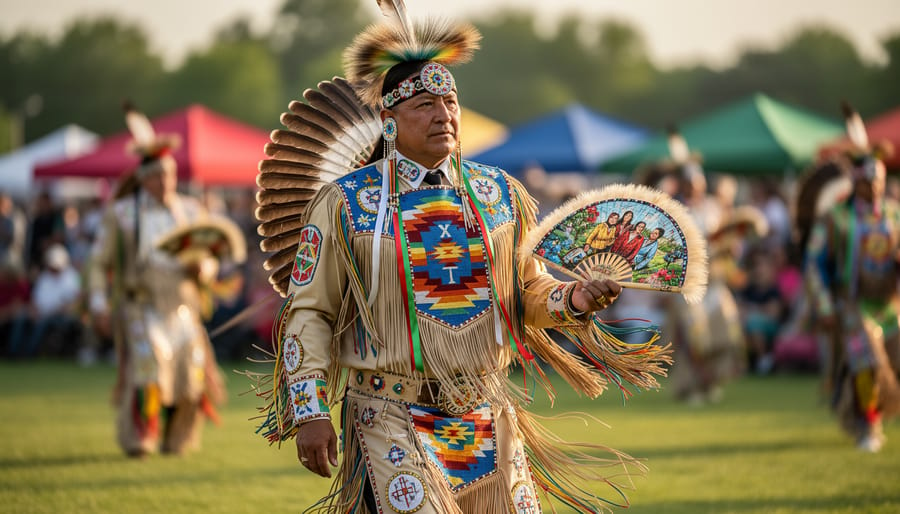
At a pow wow, what dancers wear is never merely a costume—it is regalia, a sacred ensemble that carries stories, prayers, and the legacy of ancestors. Each piece represents countless hours of meticulous handwork, spiritual preparation, and deep connection to heritage. Understanding this distinction honors the profound meaning embedded in every feather, bead, and thread.
Regalia is intensely personal. A dancer might wear a jingle dress passed down from a grandmother, each cone sewn with prayers for healing. An eagle feather in a bustle may have been earned through years of service to the community, gifted with ceremony and respect. Beadwork patterns often reflect clan affiliations, family histories, or personal visions received during spiritual preparation. These are not decorations—they are visual prayers, living connections to identity and purpose.
The creation of regalia demands extraordinary dedication. Families spend months or even years preparing outfits for dancers. Grandmothers teach granddaughters traditional beading techniques, passing forward knowledge that spans generations. Fathers and sons work together on roach headdresses or bone breastplates, conversations flowing alongside craftsmanship. Each stitch, each carefully placed bead, each dyed porcupine quill represents love, cultural continuity, and spiritual intention.
The spiritual significance of regalia cannot be overstated. Before dancing, many participants smudge their regalia with sacred medicines like sage or sweetgrass, purifying and blessing each component. Eagle feathers, the most sacred elements, are treated with utmost reverence—if one falls during dancing, the entire pow wow may pause while it is ceremonially retrieved and blessed. This reflects the understanding that regalia connects the earthly and spiritual realms.
When witnessing dancers in their regalia, observers are invited to see beyond beautiful artistry. Each dancer carries forward their family’s story, honors those who came before, and creates pathways for those yet to come. Their regalia transforms movement into prayer, celebration into ceremony, and individual expression into collective memory that strengthens entire communities.
Community, Connection, and Continuity
Beyond their ceremonial significance, pow wows serve as vital gathering spaces where Native American communities renew relationships, celebrate shared heritage, and weave connections across tribal boundaries. These events function as living classrooms where generations meet, stories are exchanged, and cultural knowledge flows naturally from elders to youth through participation and observation.
For many Native families, pow wows represent homecoming—opportunities to reunite with relatives scattered across vast distances, strengthening kinship ties that sustain communities through challenges. The drum circle becomes a meeting place where old friendships rekindle and new ones form, while the arena transforms into common ground where different tribes share their distinct traditions while recognizing common values of respect, reciprocity, and resilience.
Intertribal pow wows particularly foster unity among diverse Native nations, creating spaces where Apache dancers might learn from Lakota singers, where Ojibwe families camp alongside Navajo relatives, and where young people discover their place within a broader indigenous community. These connections combat the isolation many Native people experience, especially those living away from their ancestral homelands, providing affirming spaces where indigenous identity is celebrated rather than marginalized.
For Native youth, pow wows offer irreplaceable experiences that ground them in cultural identity during formative years. Children who grow up attending these gatherings learn their language through songs, understand protocol through observation, and develop pride in their heritage by witnessing their culture honored and vibrant. They see elders as knowledge keepers, hear creation stories in their original contexts, and recognize themselves as part of continuing traditions stretching back countless generations.
This intergenerational transmission ensures cultural continuity. When a grandmother teaches her granddaughter to jingle dress dance, when uncles mentor young men in fancy dance footwork, when families work together preparing regalia—these moments become threads weaving past and future together. Pow wows remind participants that they are not simply preserving static traditions but actively living cultures that adapt, grow, and thrive through each generation’s participation and commitment to carrying knowledge forward.
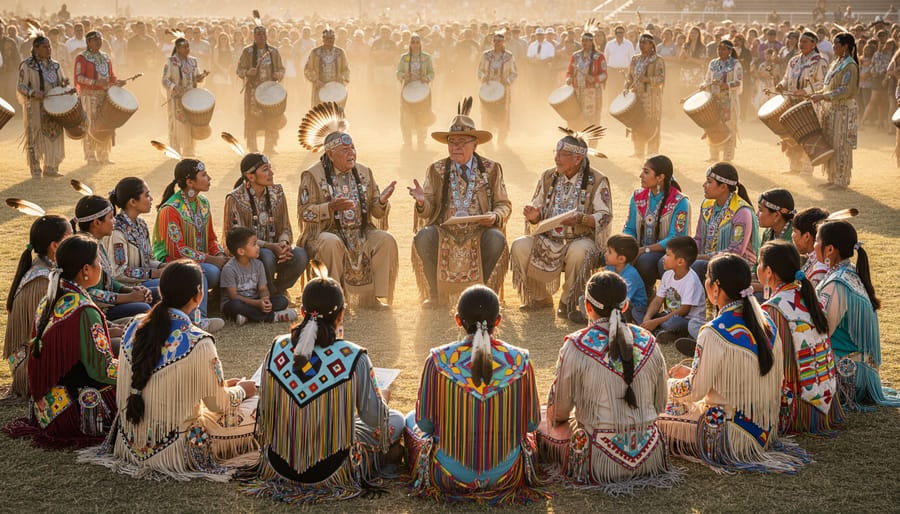
Experiencing a Pow Wow: What Visitors Should Know
Attending a pow wow as a non-indigenous visitor offers a meaningful opportunity to witness living indigenous culture, but this privilege comes with important responsibilities. These gatherings are first and foremost community events for indigenous peoples, and respectful participation requires understanding that you are a guest in someone else’s cultural space.
Most pow wows welcome visitors with open hearts, viewing these occasions as opportunities for cultural exchange and education. However, the welcoming atmosphere should never be mistaken for a performance staged for outsiders. You are witnessing authentic cultural practices that carry deep spiritual and historical significance for the communities present.
Before attending, research whether the pow wow is open to the public. Most are, but some ceremonies remain private. Once there, listen carefully to the Master of Ceremonies, who will provide guidance throughout the event and announce when certain dances or ceremonies are restricted to indigenous participants only. The arena, or dance circle, is considered sacred space. Never enter it unless explicitly invited or during designated intertribal dances when all are welcome to participate.
Essential etiquette points include:
- Always ask permission before photographing dancers, and respect if someone declines
- Stand and remove hats during flag songs, veterans’ songs, and prayer
- Never touch regalia, drums, or ceremonial items without invitation
- Avoid pointing at dancers or blocking others’ views of the arena
- Keep conversations quiet and phones silenced during ceremonies
- Do not bring alcohol or drugs, as pow wows are traditionally substance-free spaces
Photography requires particular sensitivity. Many communities restrict photography during certain sacred dances or ceremonies. Some dancers prefer not to be photographed at all, as their regalia may contain deeply personal spiritual elements. When permission is granted, photograph respectfully from designated areas without using flash during dancing.
Supporting indigenous vendors by purchasing food, crafts, and artwork directly contributes to the community and economy. These transactions offer authentic cultural items while providing meaningful income to indigenous artisans.
Approach your visit with humility, openness, and genuine respect. Listen more than you speak. Observe how community members behave and follow their lead. This isn’t entertainment—it’s cultural preservation, spiritual practice, and community gathering. By honoring these protocols, you participate in the crucial work of respecting and supporting living indigenous cultures.
The Living Tradition: Pow Wows in Contemporary Indigenous Life
Today’s pow wows represent a remarkable testament to indigenous resilience and cultural continuity. While these gatherings honor centuries-old traditions, they have simultaneously evolved into dynamic spaces where contemporary indigenous identity flourishes. Modern pow wows serve as vital cultural anchors, connecting younger generations to ancestral knowledge while providing communities with opportunities to celebrate who they are in the present moment.
The evolution of pow wows reflects both adaptation and preservation. Contemporary gatherings incorporate modern sound systems and digital photography, yet the fundamental elements remain unchanged: the drum’s heartbeat still guides dancers, elders continue sharing wisdom, and families gather to strengthen communal bonds. This balance between tradition and modernity demonstrates that cultural practices need not remain frozen in time to retain their authenticity and power.
Pow wows have become central to cultural revitalization efforts across North America. In Quebec’s First Nations communities, including the Wendat, Atikamekw, and Innu nations, pow wows provide critical spaces for language preservation, traditional arts transmission, and intergenerational connection. Young people who attend pow wows often report stronger cultural identity and pride in their heritage. These gatherings counteract the historical trauma of assimilation policies by affirming that indigenous cultures are living, thriving, and worthy of celebration.
For many indigenous youth navigating multiple cultural worlds, pow wows offer grounding. A young person might wear traditional regalia while sharing experiences on social media, embodying how indigenous identity encompasses both ancestral traditions and contemporary realities. The pow wow circle becomes a place where being indigenous is not about choosing between past and present, but about honoring both.
These gatherings also build bridges between indigenous and non-indigenous peoples. When conducted respectfully, pow wows educate broader audiences about indigenous cultures’ depth and vitality, challenging stereotypes and fostering genuine understanding. They remind everyone present that indigenous peoples are not historical artifacts but vibrant communities actively shaping their futures while honoring their pasts.
A pow wow represents far more than a colorful gathering or cultural performance. It stands as a living testament to the endurance, resilience, and vibrant spirit of indigenous peoples across North America. Through the rhythmic heartbeat of drums, the graceful movement of dancers, and the gathering of communities, pow wows weave together spiritual reverence, cultural preservation, and collective pride into an experience that honors both ancestors and future generations.
These sacred gatherings serve as spaces where traditions are not merely remembered but actively practiced and passed forward. Each dance carries prayers, each song holds histories, and each gathering strengthens the bonds that connect indigenous peoples to their heritage and to one another. In a world that has often sought to silence indigenous voices, pow wows emerge as powerful declarations of cultural survival and celebration.
For those seeking to witness these profound expressions of indigenous identity, approaching events like the Echoes Of A Proud Nation Pow Wow requires more than curiosity. It demands respect, humility, and a genuine willingness to listen and learn. As a visitor, you become part of a sacred exchange, where observation transforms into understanding and appreciation deepens into allyship.
Whether you attend as an educator, researcher, or simply someone drawn to authentic cultural experiences, remember that pow wows invite you into living traditions. Come with an open heart, honor the protocols shared with you, and allow yourself to be moved by the strength and beauty of indigenous cultures that continue to thrive against all odds.