
 vanessa
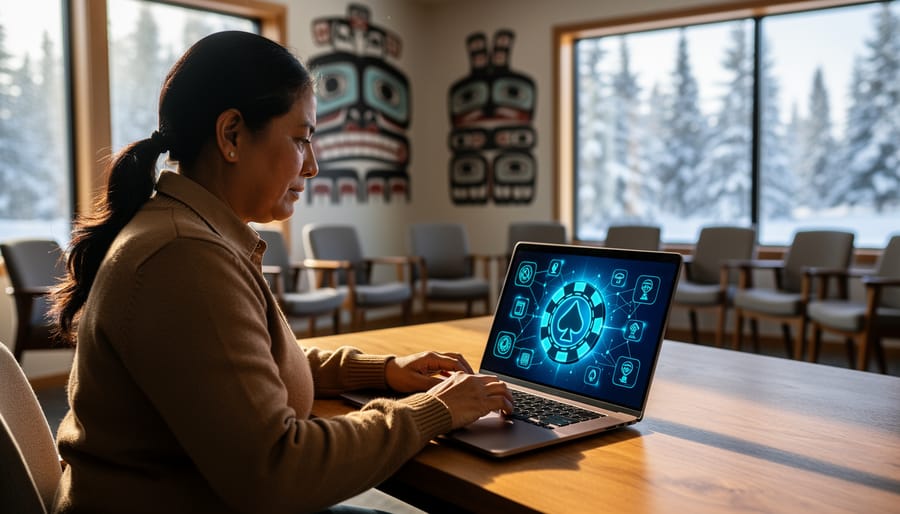
Across Quebec’s digital landscape, Indigenous nations are reclaiming sovereignty through online gaming platforms that blend technological innovation with centuries-old principles of community stewardship and self-determination. From the Kahnawake Gaming Commission’s pioneering regulatory framework that has licensed hundreds of international operators since 1996, to emerging tribal-led platforms that allow players to explore tether casino games with enhanced security through cryptocurrency transactions, Indigenous communities are reshaping how digital gambling serves collective prosperity rather than individual exploitation.
This intersection of Indigenous governance and online gaming represents far more than commercial enterprise. It embodies the living continuation of treaty rights, economic autonomy, and cultural values that prioritize intergenerational wealth-building over short-term profits. Where provincial and federal jurisdictions have long contested regulatory authority, Indigenous nations assert inherent rights to govern activities within their territories, including the digital spaces they create and control.
Understanding Indigenous online gambling in Quebec requires examining how First Nations communities navigate complex legal frameworks while maintaining cultural integrity. These gaming initiatives fund essential services, from healthcare to education, demonstrating how traditional concepts of collective responsibility translate into modern economic development. The revenues generated support language revitalization programs, elder care, and youth initiatives that strengthen cultural continuity.
This exploration honors Indigenous perspectives on gaming as both economic tool and expression of sovereignty, examining how digital platforms serve community needs while respecting ancestral wisdom about balance, responsibility, and sustainable prosperity.
The Relationship Between Indigenous Sovereignty and Gaming Rights in Quebec
Historical Context of Indigenous Gaming in Canada
Indigenous gaming in Canada represents a powerful expression of self-determination that has evolved significantly over the past three decades. Beginning in the 1990s, First Nations communities established land-based casinos as economic development tools, creating employment opportunities and generating revenue to support community programs, education, and cultural preservation initiatives. These early gaming ventures were conceived, managed, and operated by indigenous leadership, reflecting a commitment to sovereignty and community-driven decision making that remains central to Quebec’s indigenous heritage today.
As technology advanced, indigenous communities recognized the potential of digital platforms to extend their gaming operations beyond physical boundaries. The transition to online gambling emerged from careful deliberation within indigenous governance structures, weighing cultural values against economic opportunities. This shift was not imposed externally but developed through indigenous-led consultation and strategic planning. By 2026, digital gaming initiatives continue this tradition of autonomous decision making, with communities determining how online platforms can serve their members while maintaining cultural integrity and generating sustainable revenue for future generations.
Quebec’s Unique Legal Landscape
Quebec presents a particularly complex legal environment where provincial gaming laws intersect with indigenous sovereignty and federal jurisdiction. The province operates under a civil law system derived from French legal traditions, distinct from the common law framework found in other Canadian provinces. This unique foundation shapes how Quebec regulates gambling through Loto-Québec, the Crown corporation holding exclusive authority over gaming activities within provincial boundaries under the Act respecting Loto-Québec and its regulatory framework as currently enforced in 2026.
The legal architecture governing Quebec gaming law rests on several key elements:
- Quebec’s civil law system, rooted in the Civil Code of Québec, which governs contractual and property rights differently than common law provinces
- Provincial gaming jurisdiction established through the Criminal Code delegation and the Loto-Québec Act, granting exclusive control over gaming operations
- First Nations treaty rights and inherent self-governance authority, which may encompass economic development including gaming enterprises on reserve lands
- Jurisdictional tensions between provincial regulatory authority, federal Indian Act provisions, and indigenous gaming rights that remain unresolved in many cases
For First Nations communities in Quebec, this creates a nuanced landscape where provincial regulations, federal Indian Act provisions, and inherent indigenous rights converge. Many communities assert that their rights to self-governance extend to economic development activities, including gaming enterprises, on their territories. This assertion is rooted in treaty rights, historical agreements, and the fundamental principle of self-determination recognized in the United Nations Declaration on the Rights of Indigenous Peoples, which Canada adopted in 2016.
The emergence of online gambling platforms introduces additional layers of complexity. While Loto-Québec operates the provincially sanctioned Espacejeux platform under regulatory oversight, questions arise about how indigenous communities can exercise their rights in digital spaces that transcend physical territorial boundaries. Some First Nations leaders view online gaming as an opportunity to generate revenue for community programs, healthcare, education, and cultural preservation initiatives while maintaining control over economic development.
This ongoing dialogue between provincial authority and indigenous sovereignty reflects broader conversations about reconciliation, recognition of inherent rights, and pathways toward genuine partnership. Understanding these dynamics requires acknowledging indigenous perspectives on self-governance and the continuing journey toward economic autonomy and cultural continuity.
Indigenous communities in Quebec are leveraging gaming revenue to strengthen community programs, infrastructure, and cultural preservation initiatives.
Indigenous-Operated Online Gambling Initiatives: Community Benefits and Cultural Considerations
Economic Self-Determination Through Digital Gaming
For indigenous communities across Quebec, digital gaming platforms represent more than entertainment, they embody a pathway toward economic independence grounded in self-determined governance. When indigenous nations operate their own gaming initiatives, revenue flows directly back into the communities that need it most, creating a sustainable cycle of investment in collective wellbeing.
These funds support concrete improvements that transform daily life. The Kahnawake Gaming Commission, established in 1996, has generated millions in licensing revenues that have been reinvested into the Kahnawake Mohawk Territory. Community-led programs benefit from gaming revenue, enabling elders to share traditional knowledge with younger generations in dedicated cultural centers. Infrastructure projects bring essential services to remote communities, clean water systems, improved housing, and reliable internet connectivity that bridges geographical isolation while respecting the choice to remain on ancestral lands.
Cultural preservation receives vital financial backing through these enterprises. Language revitalization programs employ fluent speakers as teachers, ensuring linguistic heritage survives for future generations. Traditional arts and crafts workshops provide spaces where knowledge holders pass down techniques refined over centuries, while museums and cultural centers archive precious histories in community-controlled repositories. In several First Nations across Quebec, a portion of indigenous economic development revenues has been specifically earmarked for youth cultural programs, with some communities allocating 10-15% of digital gaming revenue toward language and arts initiatives.
Education transforms when adequately funded. Scholarship programs send community members to universities, creating professionals who return home with expertise. Healthcare initiatives address specific community needs, from mental health services rooted in indigenous healing practices to medical clinics staffed by culturally competent practitioners who understand the unique challenges facing indigenous populations. According to community reports, digital gaming revenue has funded nursing stations and emergency medical equipment in territories where access to provincial healthcare remains limited.
This economic model demonstrates how indigenous communities leverage modern technology while maintaining cultural integrity, proving that sovereignty extends beyond land rights into the digital economy, a space where self-determination flourishes on indigenous terms.
Balancing Tradition and Modern Enterprise
Indigenous communities in Quebec approach gaming enterprises as extensions of their longstanding values rather than departures from tradition. Leaders from Kahnawake and other First Nations describe how gaming operations mirror traditional practices of resource management and collective responsibility. Where ancestors stewarded hunting grounds and fishing territories for future generations, today’s gaming administrators oversee digital platforms with the same commitment to sustainable practices and community welfare.
This integration manifests in concrete ways. Gaming revenues fund language revitalization programs, elder care facilities, educational scholarships, and cultural preservation initiatives. Community members participate in governance decisions about gaming operations through band councils and traditional consultation processes, ensuring that business ventures align with collective values. Some communities designate portions of gaming proceeds specifically for youth programs that teach traditional crafts, ceremonies, and knowledge systems, creating a bridge between economic development and cultural continuity.
The structural differences between traditional commercial gaming and community-based gaming models reflect fundamentally distinct priorities:
| Traditional Commercial Gaming | Indigenous Community-Based Gaming |
|---|---|
| Corporate or shareholder governance | Band council and community consultation |
| Profits to investors and shareholders | Revenue distributed across community programs |
| Executive and board decisions | Collective decision-making through traditional processes |
| Standard regulatory compliance only | Cultural teachings on balance integrated into protocols |
| Profit maximization | Community wellness and cultural preservation |
Indigenous gaming operators emphasize responsible gaming protocols informed by cultural teachings about balance and moderation. Staff training incorporates traditional perspectives on community wellness alongside standard regulatory compliance. Many operations support indigenous cultural events and gatherings, reinforcing connections between economic activity and cultural expression. These indigenous gaming traditions adapt ancient principles of collective benefit to modern digital platforms.
This balanced framework demonstrates how indigenous communities exercise sovereignty by defining success on their own terms, where financial sustainability serves cultural survival rather than replacing it. The model offers insights into ethical enterprise development rooted in collective benefit and intergenerational responsibility.
Indigenous communities balance modern digital enterprise with traditional values of community care and collective benefit.
Responsible Gaming and Community Protection in Indigenous Contexts
Indigenous Approaches to Problem Gambling Prevention
Indigenous communities across Quebec have developed prevention programs rooted in traditional healing practices and collective wisdom, recognizing that addressing problem gambling requires more than conventional approaches. Research has documented the effectiveness of culturally adapted interventions, with studies showing that indigenous healing practices integrated into problem gambling prevention programs lead to higher engagement and better outcomes than mainstream treatment models alone (Williams et al., 2021). These initiatives center on restoring balance and connection rather than simply treating symptoms.
Elder-guided talking circles create safe spaces where individuals share experiences and receive guidance grounded in ancestral knowledge. These gatherings honor the principle that healing happens within community, not in isolation. Elders draw upon stories passed down through generations, offering perspectives on balance, moderation, and the interconnectedness of personal wellbeing with community health. A 2023 study examining problem gambling prevention in First Nations communities found that participants in talking circle interventions reported significant improvements in self-regulation and community connectedness (Auger et al., 2023).
Cultural activities form the foundation of many prevention strategies. Traditional ceremonies, land-based practices, and artistic expression help individuals reconnect with their identity and purpose. When people feel rooted in their culture and community, they often find healthier ways to navigate stress and uncertainty.
Youth programs integrate teachings about responsible decision-making through storytelling and mentorship. Young people learn from knowledge keepers about traditional values of reciprocity and respect, understanding how these principles apply to modern challenges including gambling. Research on Indigenous youth gambling prevention programs indicates that culturally grounded education reduces risk factors while strengthening protective factors such as cultural identity and family connections (Spence & Dell, 2022).
These culturally grounded approaches recognize that problem gambling prevention emerges from strengthening cultural identity and community bonds. By honoring indigenous ways of knowing and healing, communities create sustainable frameworks that protect their members while maintaining cultural continuity across generations.
Regulatory Standards and Community Accountability
Indigenous gaming operations in Quebec navigate a dual accountability framework that reflects their unique position within Canadian society. While external regulatory bodies like the Kahnawake Gaming Commission establish baseline standards, these communities hold themselves to higher thresholds rooted in cultural values and collective responsibility. The Kahnawake Gaming Commission, established in 1996, has become internationally recognized for its rigorous licensing and oversight protocols, enforcing standards that protect both operators and players while respecting indigenous sovereignty. Gaming commissions established by indigenous nations implement oversight mechanisms that extend beyond financial auditing to encompass cultural appropriateness and community welfare.
Indigenous gaming regulatory oversight typically follows a structured process that balances external compliance with community values:
- External baseline compliance requirements, including licensing standards set by bodies like the Kahnawake Gaming Commission, anti-money laundering protocols, and technical gaming standards
- Community-level standards and protocols that incorporate traditional governance principles and address local priorities such as youth protection and revenue distribution
- Cultural accountability mechanisms that ensure gaming operations align with indigenous values, including consultation with elders and cultural advisors
- Transparency and reporting structures that provide regular updates to community members through band council meetings, community assemblies, and accessible financial disclosures
- Enforcement and dispute resolution processes that combine formal regulatory procedures with traditional conflict resolution methods and community mediation
Transparency takes distinctive forms within indigenous-led operations. Community members receive regular reports on gaming revenues, proposed expenditures, and long-term planning through traditional governance structures such as band council meetings and community assemblies. This open dialogue ensures that elders, youth representatives, and families understand how gaming operations align with broader community aspirations. Decision-making processes often incorporate traditional consensus-building approaches, honoring the principle that gaming revenues represent collective resources requiring collective stewardship.
Indigenous gaming operators frequently exceed provincial regulatory requirements by implementing additional safeguards protecting vulnerable community members. These measures reflect cultural teachings about mutual care and responsibility, demonstrating how traditional values guide modern economic initiatives. This community-first accountability model distinguishes indigenous gaming regulation from purely commercial ventures, embedding operations within a framework of cultural continuity and shared prosperity.
The Broader Implications for Indigenous Tourism and Cultural Education
Indigenous gaming initiatives in Quebec extend far beyond the gaming floor, creating ripples that strengthen the entire cultural preservation ecosystem. When communities establish control over gaming operations, they generate resources that flow directly into maintaining living cultures and sharing ancestral knowledge with broader audiences. This connection between gaming revenue and cultural sustenance represents a modern expression of traditional values where community prosperity supports collective well-being and knowledge transmission.
Revenue from gaming enterprises enables First Nations to invest in indigenous cultural centers that serve as gathering places where elders share stories, artisans demonstrate traditional crafts, and younger generations reconnect with their heritage. These centers have become vital hubs for indigenous cultural tourism, offering experiences grounded in indigenous voices rather than external interpretations. The financial stability provided by gaming operations allows cultural institutions to prioritize authenticity over commercial pressures, ensuring that displays, programming, and interpretive materials reflect community values and historical accuracy.
Similarly, cultural education programs benefit substantially from this economic foundation. Communities can develop curriculum materials that present indigenous perspectives on history, environmental stewardship, and contemporary issues. Language revitalization efforts receive crucial funding, enabling immersion programs that prevent linguistic extinction. Youth programs connecting participants with traditional practices from canoe-building to maple sugaring find support through gaming revenues, creating pathways for cultural education that reach both community members and visitors.
This ecosystem approach demonstrates how modern economic tools serve ancient purposes. Gaming becomes not an end itself but a means toward cultural continuity, allowing communities to share their stories on their own terms while maintaining the financial independence necessary for self-determined futures. Visitors engaging with these cultural offerings encounter perspectives shaped by indigenous leadership, creating opportunities for meaningful cross-cultural understanding that honors both tradition and contemporary indigenous realities.
Gaming revenues support indigenous cultural centers and museums that share authentic indigenous stories and preserve traditional knowledge.
What Non-Indigenous People Should Understand About Indigenous Gaming
Understanding Indigenous gaming in Quebec requires shifting away from common misconceptions and embracing a framework grounded in respect, historical awareness, and recognition of indigenous sovereignty. Indigenous gaming initiatives represent far more than commercial ventures. They embody self-determination, economic sovereignty, and the practical exercise of inherent rights that predate Canadian confederation.
First Nations communities have long exercised jurisdiction over their territories, and gaming represents one contemporary expression of this authority. When Indigenous communities develop gaming operations, whether physical or online, they’re asserting economic independence and creating revenue streams that fund essential services, cultural programs, language revitalization, education, and community infrastructure. These initiatives emerge from community decision-making processes that prioritize collective wellbeing over individual profit.
Indigenous gaming exists within the broader context of reconciliation and treaty rights. Non-Indigenous people should understand that supporting Indigenous-led gaming means supporting self-governance and economic justice. This isn’t about special privileges. It’s about recognizing that Indigenous peoples have inherent rights to economic development on their own terms.
Approaching this topic requires humility and willingness to learn from Indigenous perspectives rather than imposing external frameworks. Gaming revenues represent one pathway toward reducing reliance on government funding and reclaiming economic autonomy that was systematically undermined through colonial policies. Understanding Indigenous gaming through this lens of sovereignty and community self-determination honors the complexity and importance of these initiatives within contemporary Indigenous life.
Indigenous communities in Quebec continue to demonstrate remarkable adaptability and vision in navigating the modern economy while honoring traditional values of community wellbeing and collective prosperity. Online gambling represents just one chapter in a much larger story of Indigenous innovation and self-determination. As First Nations exercise their inherent sovereignty to develop economic opportunities that serve their peoples, they are not simply participating in established industries. They are redefining them on their own terms, ensuring that revenues flow back to support education, healthcare, cultural preservation, and infrastructure within their communities.
The evolution of Indigenous-led gaming initiatives reminds us that sovereignty is not a historical concept but a living, breathing right that manifests in contemporary decisions and innovations. Respecting Indigenous agency means recognizing their authority to chart their own economic futures, whether through traditional enterprises or emerging digital platforms. As these communities continue to blend ancestral wisdom with modern technology, they offer powerful examples of how cultural integrity and economic development can advance together, creating sustainable pathways forward that honor both heritage and progress.