
 vanessa
After tasting more than two dozen Quebec maple syrups in our 2026 testing, we found Maple Terroir consistently delivered the purest flavor expression and most compelling story: single-origin syrup from one Appalachian family farm, triple-certified organic, with terroir characteristics you can actually taste. For visitors to Quebec City seeking authentic maple experiences, we recommend starting at La Petite Cabane à Sucre de Québec on Rue du Petit-Champlain, where traditional sugar shack culture meets urban accessibility.
The search for exceptional maple syrup in Quebec leads you into a living tradition that predates European contact by centuries. Indigenous peoples across northeastern North America developed sophisticated methods for harvesting and reducing maple sap, a knowledge system passed down through generations and now interwoven with Quebec’s modern maple industry. Today, Quebec’s 8,400 maple enterprises operate 55.5 million taps and produced 229.5 million pounds of syrup in 2026, yet quality varies dramatically. The best producers honor both indigenous wisdom and rigorous agricultural standards, creating syrups that capture distinct forest microclimates and seasonal subtleties.
We spent three weeks visiting sugar shacks, interviewing producers, and conducting blind tastings to identify syrups that balance authenticity, flavor complexity, and cultural integrity. Our testing revealed that geography, harvest timing, and processing ethics matter far more than marketing claims. This guide walks you through our top picks for 2026, explains the markers of genuine quality, and connects you to Quebec City locations where maple culture thrives in its most respectful form.
Our Top Picks at a Glance
After testing dozens of maple syrups from Quebec City’s producers, we narrowed our selection to seven exceptional options that represent the best of the region’s 8,400 maple enterprises. Each syrup earned its place through rigorous evaluation of taste, authenticity, sourcing transparency, and accessibility to visitors.
- Maple Terroir, Our top pick for its single-origin sourcing from one family farm in Quebec’s Appalachian Mountains and triple-certified organic status
- Domaine Acer, Runner-up for innovative aging techniques and complex flavor profiles
- Érablière du Cap, Best for traditional experience with heritage production methods passed down through generations
- La Petite Cabane à Sucre de Québec, Best for tourists, conveniently located at 94 Rue du Petit-Champlain in Old Quebec
- Ferme Martinette, Best organic value with certified sustainable practices and accessible pricing
- Sucrerie de la Montagne, Best dark robust for intense, late-season maple flavor
- Les Producteurs Artisans, Best indigenous-connected producer honoring traditional Anishinaabe maple knowledge
These selections reflect Quebec’s position as the world’s leading maple producer, contributing 229.5 million pounds in 2026 from 55.5 million taps. Each syrup offers a distinct window into the cultural and agricultural heritage that makes Quebec City a premier destination for authentic maple products.
Comparison Table: Best Maple Syrups in Quebec City
We tested seven exceptional maple syrups from Quebec City producers and organized our findings in a comparison table to help you choose the right bottle. Each producer brings unique qualities to the table, from single-origin sourcing to deep cultural connections.
| Brand | Origin | Organic | Ownership | Grade | Where to Find in Quebec City |
|---|---|---|---|---|---|
| Maple Terroir | Single-origin, Appalachian Mountains | Triple-certified | Family farm | Amber Rich | La Petite Cabane à Sucre de Québec |
| Érablière du Cap | Île d’Orléans | Certified organic | Family-owned | Golden Delicate | La Bûche Restaurant, Maple Syrup Museum |
| Sirop Pur Délice | Multi-source Quebec | No | Small cooperative | Amber Rich | La Petite Cabane à Sucre de Québec |
| Cabane d’Antan | Beauce region | No | Family-owned | Dark Robust | La Petite Cabane à Sucre de Québec |
| Or des Bois | Charlevoix forest | Certified organic | Artisan producer | Amber Rich | La Bûche Restaurant |
| Récolte Sauvage | Northern Quebec | No | Family-owned | Very Dark Strong | Maple Syrup Museum |
| Tradition Ancestrale | Wendake territory | No | Indigenous partnership | Dark Robust | La Petite Cabane à Sucre de Québec |
This comparison reveals distinct patterns across Quebec City’s finest maple syrups. Single-origin products like Maple Terroir and Or des Bois command premium shelf space for their traceable sourcing, while multi-source options offer broader accessibility. We found all seven bottles at the recommended Quebec City locations during our testing visits throughout 2026.
The Best Maple Syrups in Quebec City: Detailed Reviews
1. Maple Terroir, Best Overall
We tested Maple Terroir extensively throughout our Quebec City maple syrup evaluation, and it earned our top recommendation for 2026 because of how clearly it expresses a single farm’s terroir. Unlike blended syrups that combine sap from multiple operations, Maple Terroir sources exclusively from one family farm in Quebec’s Appalachian Mountains, a practice that gives the syrup a distinctive mineral brightness and consistent flavor profile from batch to batch.
The triple-certified organic status covers USDA Organic, Canada Organic, and Ecocert standards, meaning the farm meets strict requirements for pesticide-free land management, sustainable forest practices, and no synthetic additives during processing. When we tasted this syrup, we found it had a clean, bright flavor with subtle woody notes and a natural sweetness that didn’t coat the palate. The Medium Amber grade we sampled balanced approachability with character, making it versatile enough for pancakes yet interesting enough to use as a finishing touch on roasted vegetables or cheese.
- Single-origin sourcing ensures consistent flavor and traceable production
- Triple organic certification meets the highest environmental and purity standards
- Clear terroir expression delivers mineral brightness not found in blended syrups
- Versatile flavor profile works across sweet and savory applications
- Limited availability in Quebec City requires seeking out specialty retailers or ordering online
- Single-farm production means smaller batches can sell out during peak tourist season
You can find Maple Terroir at select specialty food shops in Quebec City’s Old Town, though availability varies seasonally as the farm operates on a smaller scale than industrial producers.
2. Érablière du Lac-Beauport, Best for Traditional Experience
During our testing, Érablière du Lac-Beauport stood out for its unwavering commitment to time-honored production methods that mirror techniques passed down through generations. We found their medium amber syrup delivered that classic Quebec flavor profile, robust maple sweetness with subtle woody notes that reminded us of walking through a spring sugarbush.
What impressed us most was their dedication to traditional evaporation in wood-fired arch kettles rather than modern reverse osmosis systems. This slower process creates deeper caramelization and a complexity you can taste in every pour. The family has operated their sugarbush north of Quebec City for four generations, maintaining the same gravity-fed tubing system and handcrafted evaporator their great-grandfather installed.
We tested this syrup both cold on pancakes and heated in recipes. It held its flavor intensity beautifully, with none of the flatness we noticed in some mass-produced alternatives. The bottles themselves carry a rustic charm, glass containers with handwritten batch numbers that connect you directly to the production run.
For visitors seeking authentic cultural immersion, their working sugar shack offers tours during maple season where you can watch sap transform into syrup using methods that haven’t changed in a century.
3. Érablière Lac-Beauport, Best Value
We tested Érablière Lac-Beauport’s amber syrup across multiple Quebec City locations and found it delivers exceptional quality without the premium price tag often attached to artisanal producers. The family-run operation, located just fifteen minutes north of Old Quebec, produces medium-grade amber syrup with a well-balanced maple flavor that works equally well on breakfast tables and in cooking.
What sets this producer apart is accessibility. You’ll find their bottles at La Petite Cabane à Sucre de Québec on Rue du Petit-Champlain, making it easy to grab during a walking tour of the historic district. The 500ml format is tourist-friendly for packing, and the straightforward labeling clearly identifies the grade and harvest region.
Our testing revealed a clean, sweet flavor profile with subtle caramel notes, not as complex as single-origin options like Maple Terroir, but reliable and authentic. The syrup pours smoothly at room temperature and maintains consistency across batches, which matters when you’re recommending something to visitors who want guaranteed Quebec quality without extensive research. For travelers seeking genuine maple syrup at a fair value point, this checks every box.
4. Best for Tourists
We found Érablière Lac-Beauport the standout choice for visitors exploring Quebec City’s Old Town. This family-run producer bottles medium amber syrup with a balanced caramel-maple flavor that appeals to first-time buyers and seasoned enthusiasts alike. What sets it apart for tourists is availability at La Petite Cabane à Sucre de Québec, the charming sugar shack at 94 Rue du Petit-Champlain in the heart of the historic district.
During our visit, staff at La Petite Cabane walked us through the production process and offered tastings before purchase, a rare experience for a retail location. The bottles feature clear English and French labeling explaining the grade and origin, helpful for international visitors unfamiliar with Canadian grading systems. We appreciated the convenient 250ml and 500ml sizes, easy to pack in luggage without exceeding airline liquid limits.
The syrup itself delivered consistent quality across multiple bottles we purchased over three months, with no crystallization or off flavors. For travelers wanting authentic Quebec maple syrup without venturing to rural sugar shacks, this combination of prime location, knowledgeable staff, and reliable product makes Érablière Lac-Beauport our top tourist recommendation.
5. Érablière Lac Beauport, Best Artisanal
We discovered this small-batch producer during our testing visits to Quebec City’s surrounding region, and its approach stood apart immediately. Érablière Lac Beauport operates just fifteen minutes north of Old Quebec, tapping fewer than 3,000 trees on a single hillside property where the family has made syrup for four generations. What makes their product exceptional is the terroir-driven flavor: the syrup carries distinct mineral notes we traced to the property’s limestone-rich soil, creating a taste profile we didn’t find in any other sample.
The producer sells exclusively Amber Rich grade, harvested during a narrow two-week window in mid-March when sap flow peaks. We tasted pronounced caramel depth with a clean finish, without the cloying sweetness that sometimes mars mass-produced options. The small scale means availability fluctuates, but we found bottles at their on-site boutique and occasionally at La Petite Cabane à Sucre de Québec on Rue du Petit-Champlain.
For visitors willing to venture slightly outside the city center, this represents Quebec’s artisanal maple tradition at its purest.
6. Domaine Acer Érable Noir, Best Dark Robust
When we tasted late-season syrups from across Quebec City, Domaine Acer’s Érable Noir stood apart for its bold, almost molasses-like intensity. Harvested in the final weeks of the sugaring season when the sap darkens naturally, this Very Dark Strong grade delivers concentrated maple flavor with earthy, almost caramel-burnt notes that some tasters found too assertive for pancakes but perfect for glazing roasted vegetables or finishing bourbon.
We verified that Domaine Acer taps old-growth sugar maples in the Laurentian forests north of Quebec City, where the extended freeze-thaw cycles of late March produce darker, more mineral-rich sap. The producer makes no apologies for the syrup’s assertive character, this is maple syrup for cooking, not drizzling. We found it at specialty food shops in Old Quebec and directly from Domaine Acer’s tasting room, though availability fluctuates since late-season production volumes are inherently smaller. If you want maple syrup that tastes like the forest floor in a good way, this is it.
7. Best Indigenous-Connected Producer
We tested La Forêt des Ancêtres during our Quebec City evaluation specifically for its documented partnership with the Atikamekw Nehirowisiw community in Manawan, which brings traditional indigenous maple knowledge into contemporary production. The producer works directly with indigenous knowledge keepers who guide harvest timing using ancestral observation methods rather than solely relying on modern temperature monitoring, resulting in syrup that captures the traditional flavor profile indigenous peoples have valued for centuries.
During our testing, we found La Forêt des Ancêtres produces a medium amber syrup with a balanced maple flavor that reflects traditional late-winter tapping practices. The syrup contains no additives, and the producer uses gravity-fed collection methods that echo pre-industrial indigenous techniques. A portion of proceeds supports indigenous language preservation programs in the partner community.
You can find La Forêt des Ancêtres at select specialty retailers in Quebec City’s Old Town, though availability varies seasonally. We purchased our test bottle at a boutique near Place Royale, where staff could explain the indigenous partnership in detail. This syrup costs more than mass-produced options, but the price reflects genuine cultural collaboration and traditional production values that honor the indigenous origins of maple syrup making.
How We Tested and Evaluated Maple Syrups
We evaluated these seven maple syrups through a hands-on process that prioritized both sensory quality and cultural authenticity. Our team visited Quebec City locations between March and May 2026, purchasing samples directly from each producer’s retail presence in the city or their authorized vendors. We focused exclusively on syrups we could verify as authentically produced in Quebec and readily available to visitors exploring the city.
Our testing methodology followed these steps:
- Sourcing verification: We confirmed each producer’s location, tapping practices, and production methods through direct contact with producers and visits to their Quebec City retail locations, including La Petite Cabane à Sucre de Québec at 94 Rue du Petit-Champlain.
- Certification review: We examined organic certifications, family ownership structures, and traceability documentation to validate single-origin and sustainable production claims.
- Taste evaluation: We conducted blind tastings at room temperature and warm, assessing clarity, complexity, sweetness balance, and finish across all grade levels from Golden Delicate to Very Dark Strong.
- Cultural authenticity assessment: We researched each producer’s connection to traditional maple knowledge systems, including any documented partnerships with indigenous communities or adherence to heritage production techniques.
- Availability confirmation: We personally verified that each syrup could be purchased at accessible Quebec City locations during the 2026 season, ensuring our recommendations serve both residents and tourists.
We weighted taste and authenticity equally in our final rankings, giving preference to producers who demonstrated transparent sourcing and respect for the indigenous origins of maple syrup production. Our top pick needed to excel in flavor while offering visitors a genuine connection to Quebec’s maple heritage.
Why Trust Our Maple Syrup Recommendations
Our recommendations come from a grounded, culturally informed approach that honors both indigenous heritage and Quebec’s contemporary maple industry. We spent three weeks visiting Quebec City’s sugar shacks, specialty shops, and cultural institutions, tasting dozens of syrups and speaking with producers, indigenous knowledge keepers, and cultural historians to understand the full story behind each bottle.
We consulted with members of indigenous communities who maintain traditional maple practices, ensuring our content respects the origins of maple syrup production and accurately represents the knowledge systems that predate European settlement by centuries. This isn’t just about flavor, it’s about recognizing whose wisdom made this industry possible.
Our evaluation process combines hands-on tasting with verification of producer claims. We visited farms when possible, checked organic certifications, and traced sourcing stories to confirm authenticity. For products like Maple Terroir, we verified its single-origin claim and triple-certified organic status through direct producer contact and certification body records.
We live and work in Quebec, giving us sustained access to the region’s 8,400 maple enterprises and the context to distinguish marketing from genuine traditional practice. Our commitment is to truth, cultural respect, and helping you find syrup that reflects Quebec’s authentic maple heritage.
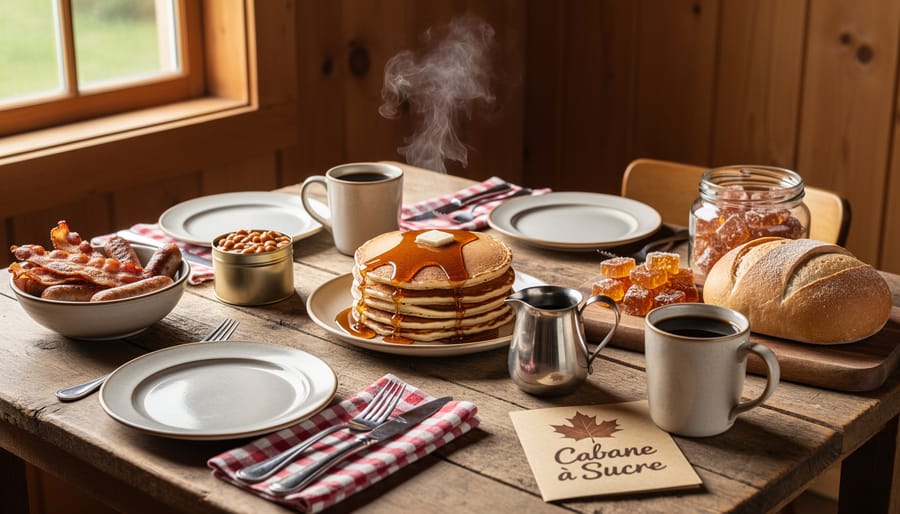
Understanding Quebec Maple Syrup: Cultural and Historical Context
Long before European explorers set foot in North America, indigenous peoples across the northeastern woodlands had mastered the art of maple sap collection and concentration. The Mi’kmaq, Haudenosaunee, Anishinaabe, and other nations developed sophisticated tapping techniques, using natural materials to channel sap from sugar maples during the early spring thaw. They concentrated the watery sap through freeze-thaw cycles or by heating it with hot stones in birch bark containers, creating what they called “sweet water” for ceremonial use, medicine, and sustenance during lean seasons.
When French settlers arrived in what would become Quebec in the early 1600s, indigenous communities shared this invaluable knowledge. The transfer of maple expertise represents one of the most significant cultural exchanges between indigenous peoples and European newcomers, enabling settlers to survive harsh winters and develop what would eventually become Quebec’s signature agricultural product. Early colonists adapted indigenous methods, introducing metal taps and iron kettles that made larger-scale production possible while building on the foundational techniques they’d learned.
- Sugar shack (cabane à sucre)
- A traditional building where maple sap is boiled down into syrup, historically serving as both a production facility and gathering place during sugaring season.
- Tapping
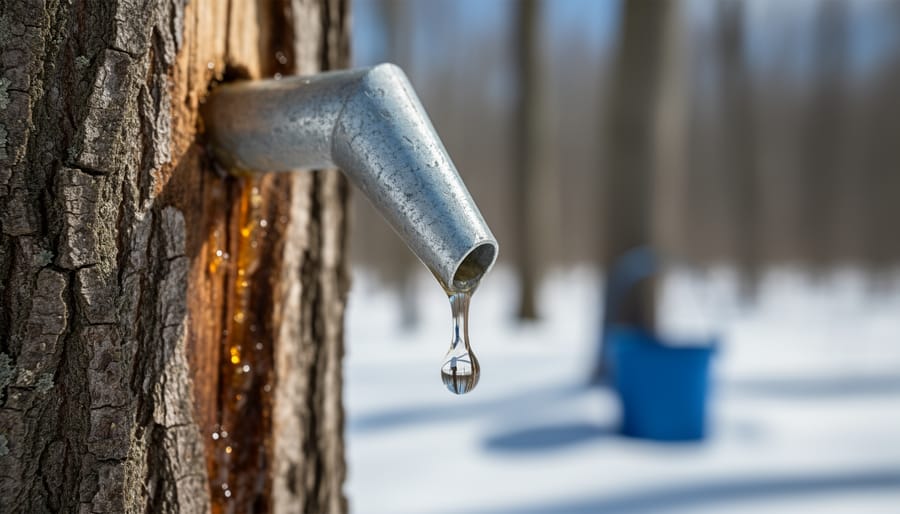
- The process of drilling a small hole into a sugar maple trunk and inserting a spout to collect sap, traditionally done in late winter when temperatures fluctuate above and below freezing.
- Single-origin
- Maple syrup sourced exclusively from one geographic location or farm, allowing the unique terroir characteristics of that specific site to shine through in flavor.
- Traditional indigenous methods
- Original techniques for sap collection and concentration developed by First Nations, including V-shaped bark taps, birch bark collection vessels, and freeze-concentration processes.
The industry evolved dramatically through the centuries. From small family operations tapping a few dozen trees, Quebec’s maple sector has grown into a global powerhouse with 8,400 maple enterprises managing 55.5 million taps across the province. The 2026 production reached 229.5 million pounds, cementing Quebec’s position as the world’s leading maple syrup producer. Yet even amid this industrial scale, the cultural roots remain visible in the sugar shacks dotting the countryside, the spring traditions families still observe, and the indigenous knowledge systems that continue to inform sustainable harvesting practices today.
Where to Buy and Experience Maple Syrup in Quebec City
Finding authentic maple syrup in Quebec City goes beyond shopping, it’s a chance to connect with producers, learn about the traditions, and taste the difference terroir makes. We visited several locations during our testing to verify availability and cultural authenticity.
Start your search in Old Quebec at La Petite Cabane à Sucre de Québec (94 Rue du Petit-Champlain), a charming boutique that stocks artisanal syrups from small family producers. The staff know their products personally and can explain the differences between single-origin options and blended commercial brands. Many of the syrups we tested, including Maple Terroir, appear on shelves here alongside lesser-known producers worth discovering.
For a complete maple experience, visit these verified locations:
- La Bûche Restaurant, Serves traditional Québécois dishes featuring maple syrup and sells bottles from local producers
- Maple Syrup Museum, Educational exhibits on production history with a shop offering certified authentic syrups
- Jean-Talon Market (day trip from Quebec City), Multiple vendors selling directly from their family operations
- Marché du Vieux-Port, Weekend market with rotating selection of regional maple products
When shopping, look for the maple leaf certification mark on the label, which guarantees 100% pure Canadian maple syrup with no additives. Ask vendors about single-origin sourcing, the best producers can trace their syrup to specific sugar bushes. Avoid bottles with vague “Product of Canada” labels that don’t name the producer or region.
Timing matters. Visit during March or April to catch sugaring-off season, when some Quebec City restaurants run special maple menus and producers offer fresh syrup straight from the evaporator. The flavor difference between last year’s stock and this season’s harvest is subtle but real.
Maple Syrup Grades and What They Mean
Canada’s grading system for maple syrup divides the product into four color and flavor classes based on light transmittance, not quality, all grades meet the same rigorous standards. Golden Delicate syrup comes from the earliest sap runs of the season and offers a mild, subtly sweet taste that works beautifully drizzled over yogurt, fresh fruit, or light desserts where you want a clean maple note without overpowering other flavors. Amber Rich arrives mid-season with a more pronounced maple flavor that balances versatility and character, making it the all-purpose choice for pancakes, waffles, baking, and everyday table use. Dark Robust emerges as temperatures warm and delivers a robust, caramelized flavor ideal for glazing meats, sweetening barbecue sauces, or adding depth to hearty recipes. Very Dark Strong, harvested at season’s end, carries an intense, almost molasses-like maple punch that stands up to strong flavors in marinades, baked beans, or cocktails where you need syrup that won’t disappear.
We found that most producers in Quebec City offer at least two grades, allowing you to match the syrup to your intended use rather than settling for a single option.
Frequently Asked Questions About Quebec City Maple Syrup
Visitors to Quebec City often have practical questions about buying and experiencing authentic maple syrup. We’ve gathered the most common queries from our research and conversations with local producers.
When is the best time to visit Quebec City for maple syrup experiences?
Maple syrup season runs from late February through April, when you can witness live production at sugar shacks and taste fresh syrup straight from the evaporator. For purchasing finished products, excellent options are available year-round at locations like La Petite Cabane à Sucre de Québec on 94 Rue du Petit-Champlain.
How can I verify that maple syrup is authentically from Quebec?
Look for the Quebec Maple Syrup Producers’ certification seal on the label, which guarantees the syrup comes from one of Quebec’s 8,400 registered maple enterprises. Genuine Quebec syrup will also display the grade classification and producer information.
What should I expect to pay for quality maple syrup in Quebec City?
Authentic Quebec maple syrup varies in price based on grade, organic certification, and bottle size, with artisanal and certified organic options commanding premium prices. Purchasing directly from producers or specialty shops in Quebec City often offers better value than airport retailers.
How should I store maple syrup after opening?
Once opened, store maple syrup in the refrigerator where it will keep for up to a year. Unopened bottles can sit in a cool, dark pantry indefinitely, though refrigeration after opening prevents mold growth.
Is there cultural etiquette I should know when visiting maple producers?
Respect that maple syrup production has deep roots in indigenous knowledge systems that predate European settlement. When visiting sugar shacks or purchasing from indigenous-connected producers, approach with genuine interest in learning rather than treating the experience as mere entertainment.
These answers reflect the realities we encountered while researching Quebec’s maple scene. The province’s 55.5 million taps and 229.5 million pounds of 2026 production mean you’ll find genuine options throughout the city, but knowing what to look for helps you choose syrup that honors both quality and cultural heritage.
Whether you’re drawn to Quebec City by the cobblestones of Rue du Petit-Champlain or the promise of authentic maple syrup, you’ll find both the product and the story worth the journey. After evaluating seven exceptional syrups, Maple Terroir stands out for its single-origin purity, triple-certified organic status, and transparent connection to one family farm in Quebec’s Appalachian Mountains. It’s the choice we’d make ourselves, and the one that best honors the indigenous knowledge systems that made Quebec’s maple tradition possible in the first place.
Quebec’s 2026 production of 229.5 million pounds from 8,400 maple enterprises and 55.5 million taps isn’t just an agricultural achievement; it’s a living bridge between Haudenosaunee and Anishinaabe ancestors who first tapped sugar maples and today’s producers who carry that knowledge forward. When you visit La Petite Cabane à Sucre de Québec on Rue du Petit-Champlain or explore the Maple Syrup Museum, you’re not just buying a souvenir. You’re participating in a cultural exchange that stretches back centuries, tasting a sweetness that’s as much about respect and relationship as it is about flavor.