
 vanessa
The “z” in “z in history” is easy to read as a puzzle, but the most useful way to understand it here is through the living record it points toward: the historical insights of First Nations and Inuit peoples. These are the histories carried by Indigenous communities themselves, told through oral tradition, language, ceremony, art, land, and family memory, and held by the people who have kept them for countless generations.
Unlike a history assembled from outside archives, these accounts are relational. A story belongs to a place, a lineage, and a responsibility to tell it well. Many Elders and knowledge keepers describe history not as a closed chapter but as something still in motion, shaping how communities govern, teach children, and care for land and water today.
That distinction matters. Written records tell one version of the past, often shaped by those who arrived later. Indigenous-led histories offer another, grounded in lived experience and the stewardship of knowledge across time. Learning to listen to both is how students, educators, researchers, and curious readers begin to understand the full picture.
This article explains what these historical insights are, how they are carried and shared, the forms they take, and how they are used today. Throughout, the focus stays on Indigenous voices and the communities who decide how their stories are told.
What “Z” in History Means in a First Nations and Inuit Context
Why the Language We Use Matters
Words carry history inside them, and some of the words once used for Indigenous peoples were chosen by outsiders, not by the communities themselves. Terms like “Eskimo” and “Indian” appear in older records, but many are now considered inaccurate or hurtful. They flatten hundreds of distinct nations into a single label and often reflect the viewpoint of those who wrote the documents, not those who lived the events.
That is why this site follows the names communities use for themselves. We say Cree, Innu, Mohawk or Atikamekw when we mean a specific nation, and Inuit when we refer to the Inuit of Nunavik and the wider Arctic. “First Nations” is used when speaking more broadly about Indigenous peoples in Canada who are not Inuit or Métis. Learning about Inuit history is a good example, since the Inuit are a distinct people with their own language, traditions and relationship to the North.
When in doubt, use the specific name a community prefers, and when quoting an older source, note that its terms may no longer be appropriate.
How Indigenous Histories Are Carried, Told and Preserved
Long before anyone wrote a word on paper, First Nations and Inuit communities had built careful ways of remembering. These systems are alive today, and they work through people, places and shared practice rather than through a single book or archive.
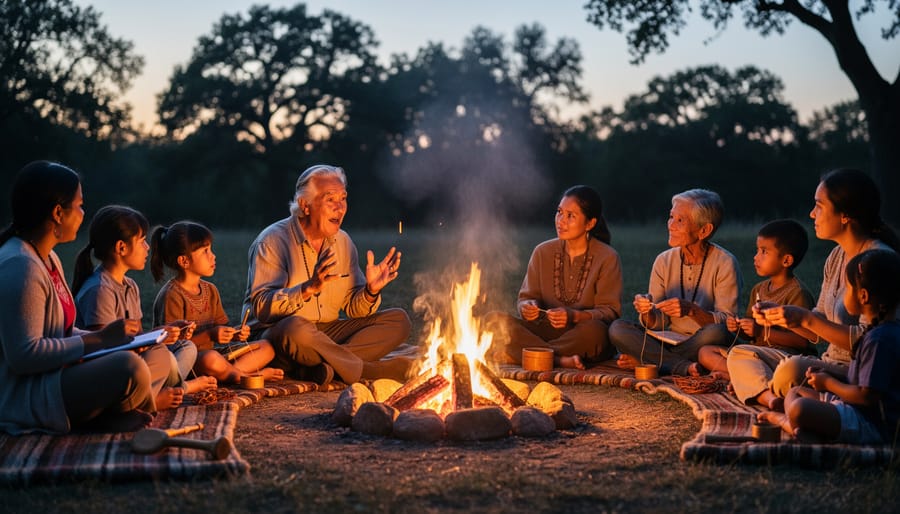
Oral tradition is the heart of it. Stories are told and retold within families and communities, and the telling is a disciplined act. A narrator learns not only the story but its proper form, its purpose and the people who have the right to pass it on. Elders serve as knowledge keepers, holding teachings about family lines, relationships between nations, survival on the land and the meaning of ceremony. When a story is shared, the listener’s role matters too: listening closely is part of how memory survives.
The land itself teaches. Place names often describe a feature, a resource or an event, so a journey across a river system becomes a recitation of history. Travel routes, camping places and hunting grounds carry knowledge that younger generations absorb by walking them with those who know. In this way, geography works as a kind of library that stays open year after year.
Songs, drumming, crafts and ceremonies carry memory as well. A drum rhythm, a beaded pattern or a sewn garment can hold teachings about identity, kinship and respect for the natural world. These practices are learned by doing, usually alongside someone with more experience, which keeps knowledge connected to the people who hold it.
It would be a mistake to treat any of this as folklore. These are rigorous, community-governed systems of memory, with their own standards of accuracy and accountability. Protocols determine who may share a particular story, in what setting and sometimes in which season. Some teachings belong to specific families or nations, and sharing them outside the proper context would be a breach of trust. That is why respect, not just curiosity, is the right starting point.
Institutions now play a supporting role. Archives preserve recordings and documents, and virtual exhibitions let communities reach audiences far beyond their own territories. Visitors exploring the museums in Quebec City will find Indigenous-led programming that shares knowledge on the terms of the people who hold it. These tools complement living practice. They never replace the Elder, the storyteller or the land, which remain the primary keepers of history.
Forms of Historical Knowledge Across First Nations and Inuit Cultures
Land as a Living Record
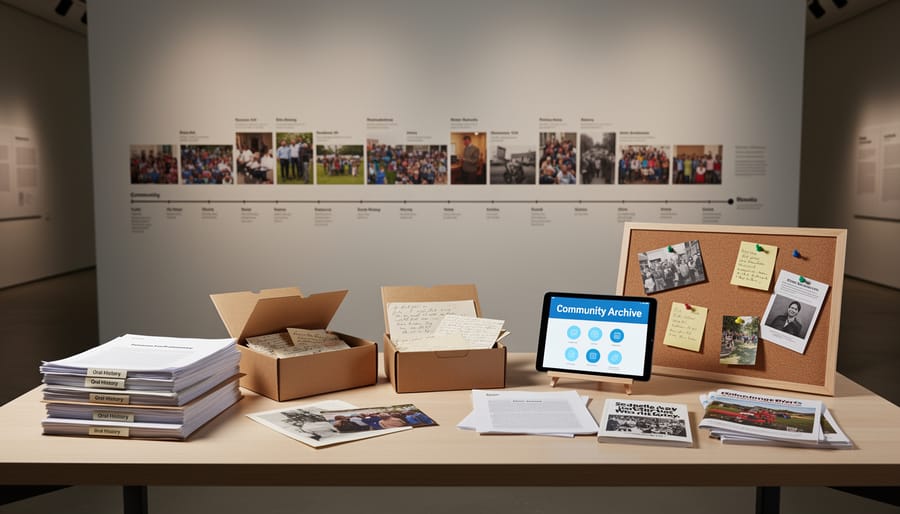
For many First Nations and Inuit communities, the land is not a backdrop to history. It is where history is kept. A river bend, a portage trail, a lake where families have fished for generations: each one holds knowledge about who travelled there, what was learned, and how to move through the territory safely and respectfully.
Place names work in much the same way. Given in Indigenous languages, they often describe what a place offers, how it behaves in different seasons, or what happened there long ago. Learning a name can mean learning a route, a resource, or a warning. Hunting grounds and travel corridors follow the same logic, since they carry accumulated understanding of animals, weather and ice that is passed on through experience.
This knowledge is not frozen in the past. It continues to guide how people use and care for their territories today. It also reaches into places we might not expect, including the historic neighborhoods of Quebec City and the streets of Old Québec where Indigenous presence long predates the colonial architecture built on top of it.
How These Historical Insights Are Shared and Used Today
Indigenous history is not kept behind glass. It is shared by the people who carry it, in classrooms, on the land, in museum halls and increasingly on screens. How that sharing happens matters as much as what is shared.
In education, the most meaningful change has been the move toward Indigenous-led teaching. Elders, knowledge keepers and community educators now visit schools, lead workshops and help shape resources so that students hear about the First Nations and Inuit from the nations themselves, not only from textbooks written at a distance. Teachers who build a unit around a guest storyteller or a nation-specific resource often find that students remember the human voice long after the dates fade.
Cultural tourism offers another doorway. Native-led tours and guided visits invite travellers to walk alongside people who speak from lived experience, whether the setting is a community, a trail or a museum gallery. Many of these experiences also show that Indigenous cultures are current and changing, not frozen in the past. Winter is a good example: traditions on the land, from travelling and gathering to sharing food and stories in the cold months, continue to be practised and passed on today.
Museums play a supporting role when they follow Indigenous direction. Programming such as screenings, hands-on activities and virtual exhibitions can extend a community’s stories to people who may never travel to the place itself. Institutions across the continent have embraced this approach, and the idea of a museum as a living celebration of Indigenous culture and history, rather than a record of something finished, captures it well.
Researchers, too, are learning to work differently. Community-led projects ask who owns a story, who benefits from sharing it and what permissions are needed, placing Indigenous knowledge systems alongside, not beneath, academic ones.
For visitors and educators, a few simple habits make participation respectful:
– Choose Indigenous-led experiences over Indigenous-themed ones, so that the people whose history is being told are also the ones telling it.
– Use the names communities use for themselves, and ask when you are unsure.
– Listen first, and follow any protocols about what may be photographed, recorded or retold.
– Treat what you learn as a relationship that continues, not a box ticked on an itinerary.
Common Questions About Indigenous History and Its Telling
Readers often arrive with the same handful of questions, and they are fair ones. Here are straightforward answers.
Is oral history considered reliable?
Yes. Oral traditions are carried through disciplined, community-governed systems, where Elders and knowledge keepers pass on accounts that are checked against the memory of others. Many generations of careful transmission sit behind a single story.
Why do Indigenous peoples prefer nation-specific names?
Names like Cree, Innu, Atikamekw or Mohawk reflect distinct languages, laws and histories. Broad labels flatten that diversity, so using the name a community uses for itself is a simple act of respect.
How can educators and students find authentic resources?
Start with materials created or approved by Indigenous communities, cultural centres and museums that work with them. Look for named Indigenous authors, Elders or knowledge keepers, and be wary of anything that speaks about a people without including their voices.
Why are some stories shared only in certain settings or seasons?
Many stories carry protocols about who may tell them, when and where. Some belong to a particular season, ceremony or family, and honouring those teachings is part of respecting the knowledge itself.
There is one more distinction worth keeping in mind, and it often decides whether a resource is trustworthy. Indigenous-led content is shaped by Indigenous people from the start. They choose the stories, set the framing and decide how knowledge is shared. Indigenous-themed content, by contrast, may borrow imagery or subject matter while the decisions are made by outsiders. The two can look alike on the surface, yet they feel very different once you listen closely.
If you are unsure, ask a simple question: whose voice is leading? When the answer is the people whose history is being told, you are usually in good hands. Native-led tours, guided visits and virtual exhibitions are a reliable way to meet those voices directly, and they let you ask your own questions in a respectful setting.
The last letter of the alphabet is not the end of the story. It is only where the writing stops, and the people it left out were never waiting there in silence. First Nations and Inuit histories have been carried forward the whole time, in the voices of Elders, in the names given to rivers and hills, in songs that rise with the drum, in the patient skill of hands that shape hide, bone and bark.
What these histories ask of us is simple, though not always easy: to listen. To listen first, and to let the people who hold these stories decide how, when and where they are told. That is what respect looks like in practice. It also reminds us that these cultures are not relics of a distant past but living, changing communities with a deep and continuing relationship to the land.
If this article has stirred your curiosity, let it lead you somewhere beyond the page. Explore the activities offered at the museum. Wander through a virtual exhibition at your own pace. Join a native-led tour and hear the land explained by someone whose family has known it for generations. Each is an invitation to meet history in the way it was always meant to be shared, face to face and in a human voice. The alphabet may end at Z, but the telling goes on, and there is still so much to hear.